The Racist, Authoritarian Pedigree of Christian Nationalism
“Baal and the Ballot” traced the ancient Canaanite logic of hierarchy and divine authority that still underlies American theocratic impulses. Christian Nationalism is that system weaponized in its most American form: a toxic fusion of Protestant white supremacy, apocalyptic paranoia, and naked power-lust dressed up as piety.
Christian Nationalism seeks to control policy and recast the state as an instrument of biblical dominion. It frames dissenters, non-Christians, and anyone outside the sanctioned ethno-religious identity as existential threats. It presents itself as a defense of “Judeo-Christian values” while advancing a direct assault on the pluralistic republic the Founders designed to guard against clerical tyranny.
Puritan Roots and the Myth of the “Christian Nation”
The fantasy that America was founded as an explicitly Christian nation: white, Protestant, and divinely ordained, runs deep in the country’s ideological bloodstream. It reaches back to the Puritan settlers, who cast themselves as a new Israel, a “city on a hill” charged with building God’s kingdom on earth. In Massachusetts Bay, that vision hardened into theocracy: enforced religious conformity and brutal punishment for dissent, alongside violence against Indigenous peoples justified as divine mandate. Most starkly, in the 1637 Pequot Massacre, Puritan forces burned a village and slaughtered hundreds, calling it God’s will.
The Second Klan: Protestant Terror in Christian Robes
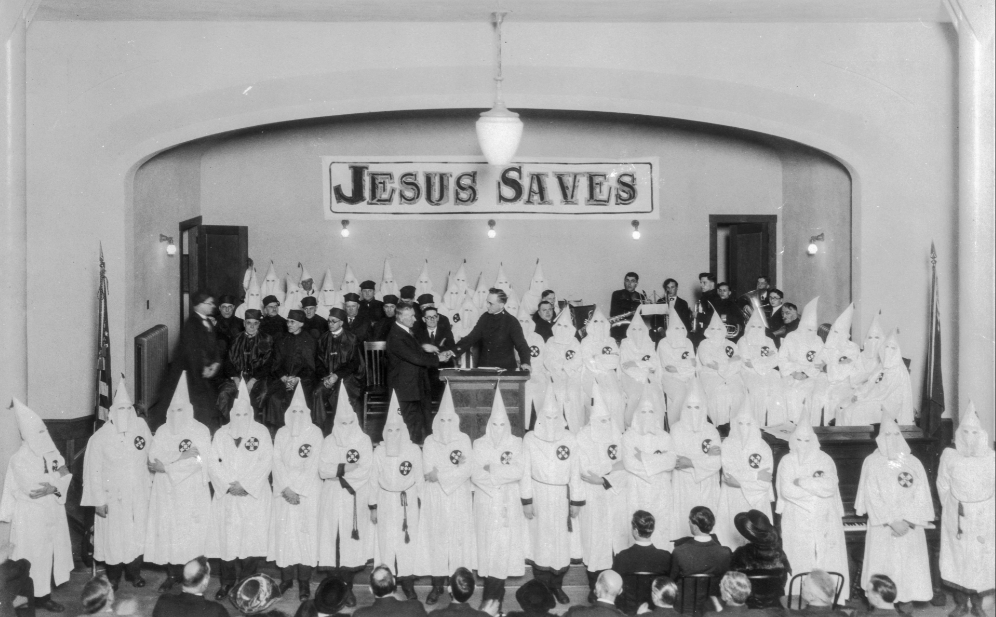
In the 1920s, this fantasy found a powerful and highly visible enforcer in the reborn Ku Klux Klan. Its modern incarnation began in 1915, when Methodist preacher William Joseph Simmons climbed Stone Mountain with a small group of followers and staged a ritual of national and religious consecration. A burning cross cast light over an improvised altar where an American flag, a sword, and a Bible were arranged as one, binding nationalism, violence, and Christianity into a single symbolic act.
From that moment, the second Klan cast itself as a sacred order defending white Protestant America. It grew into a mainstream movement, claiming as many as five million members and wielding political influence across states like Indiana, Colorado, and Oregon. Cross burnings were framed as “the light of Christ.” White robes symbolized Protestant purity. Rallies opened with prayer, hymns, and Bible readings, fusing revivalist spectacle with political mobilization.
Klan organizers moved seamlessly through Protestant church networks, transforming them into engines of recruitment and ideological reinforcement. In April 1927, a week-long Klan revival in Evergreen, Alabama drew large crowds with sermons that blended scripture, nationalism, and white supremacy, culminating in new initiations. Throughout the country, the Klan staged multi-day revivals on church grounds, advertised in local newspapers, and led by ministers and Klan lecturers who cast their message in explicitly biblical terms. Congregations hosted “Klan Day” services, invited robed speakers into their pulpits, and folded the movement’s rhetoric into sermons on sin, morality, and national destiny. Outdoor gatherings mirrored tent revivals, complete with altar calls, patriotic pageantry, and cross lightings presented as sacred ritual.
![[Flyer for Ku Klux Klan Day], pamphlet, 1923; (https://texashistory.unt.edu/ark:/67531/metapth31223/: accessed March 30, 2026), University of North Texas Libraries, The Portal to Texas History, https://texashistory.unt.edu; crediting Star of the Republic Museum.](https://thebohemianstar.com/wp-content/uploads/2026/03/klan-day-1024x692.png)
Klansmen pledged to defend “100% Americanism,” a slogan encoding white Protestant supremacy against Catholics, Jews, Black Americans, immigrants, and anyone outside their vision of national identity. They organized boycotts of Catholic businesses, pushed for laws mandating Protestant Bible reading in public schools, backed immigration restriction acts, and helped pass Oregon’s 1922 Compulsory Education Act aimed at shutting down Catholic schools. They infiltrated churches, installed allies in local and state offices, particularly in Indiana, where the Klan dominated state politics, and enforced their moral order through intimidation, floggings, and lynchings. In 1925, Indiana Grand Dragon D.C. Stephenson orchestrated the abduction, rape, and eventual death of Madge Oberholtzer, a crime that exposed the brutality underlying the movement’s claims of moral guardianship. Across the South and Midwest, Klan units carried out public whippings and acts of racial terror to discipline anyone who defied their code.
This is the same ideology now operating under the banner of modern Christian Nationalism.. The language persists: America cast as a divinely ordained ethnostate, outsiders framed as corrupting forces, and violence recast as righteous defense of faith and nation.
Gerald L.K. Smith, Christian Identity, and the Explicit Invention of “Christian Nationalism”
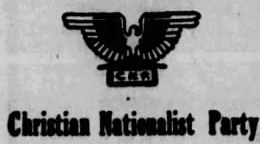
The term itself gained traction in the 1940s through Gerald L. K. Smith, a fascist-adjacent demagogue who founded the Christian Nationalist Crusade and the Christian Nationalist Party. A former aide to Huey Long, Smith fused populism with virulent antisemitism, casting Jews as the architects of communism, civil rights movements, and any perceived threat to what he called “white Christian civilization.” His roots were embedded in the American fascist movement where he had been a member of the Silver Legion of America (the “Silver Shirts”), an overtly fascist and pro-Nazi paramilitary group explicitly modeled on Hitler’s Brownshirts and Mussolini’s Blackshirts, and he reportedly wrote to its leader, William Dudley Pelley, in 1933 expressing his desire to organize a “Silver Shirt storm troop.” By the mid-1940s, contemporaries, including labor organizations and Jewish publications such as the B’nai B’rith Messenger, openly labeled him “America’s Number One Fascist” and the “Little Fuehrer.” Smith’s own rhetoric matched the label; he called for the creation of a “fascist army” of one million men to seize control of polling places during the 1936 election and later founded the America First Party (1943) as a vehicle for his pro-Nazi nationalist agenda. Historians describe him as a pioneer of “American clerico-fascism.” This was a distinctly U.S. variant that combined fundamentalist Christianity with paramilitary organization, anti-democratic politics, and explicit white supremacy. Through the Christian Nationalist Crusade he promoted the deportation of Jews and African Americans. His newspaper, The Cross and the Flag, circulated the fraudulent Protocols of the Elders of Zion. He collaborated with other pro-Nazi agitators such as Father Charles Coughlin and Gerald Winrod, and churned out conspiracy theories, political propaganda, and apocalyptic warnings. His presidential campaigns openly called for preserving the United States as a white Christian nation.
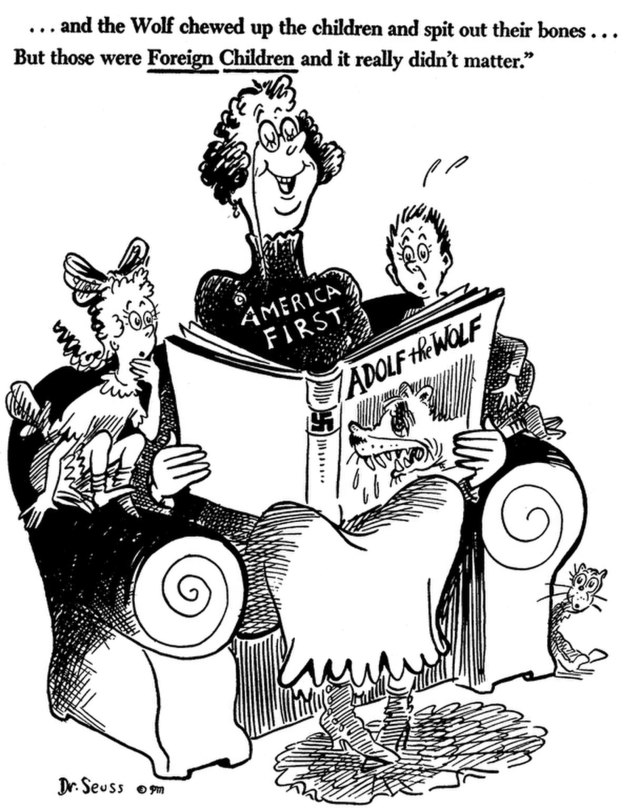
Smith’s movement fed directly into the rise of Christian Identity, a violently exclusionary theology that grew out of British Israelism in the early twentieth century. It expanded rapidly after World War II. Preachers such as Wesley Swift taught that white Europeans were the true descendants of the Lost Tribes of Israel, recasting Jews as a satanic lineage and non-white peoples as inherently inferior. Identity theology provided a religious framework for racial hierarchy, sanctified violence against what adherents called the “Zionist Occupied Government,” (ZOG) and framed political conflict as an apocalyptic race war.
This belief system moved through a network of extremist groups, shaping organizations like Aryan Nations and The Order, while reinforcing older currents within the Ku Klux Klan and other allied movements. It functioned as connective tissue, linking Klan terror, Smith’s political crusades, and the paramilitary formations that followed in the postwar decades.
In Smith, Christian Nationalism absorbed and Americanized the full clerical-fascist template: militant anti-democratic hierarchy dressed in the language of Christian restoration. That template remains visible in the rhetoric, networks, and apocalyptic framing of today’s Christian nationalist movement.
While Christian Identity and its descendants remained locked in explicit racial conspiracy on the extremist fringe, still denouncing the state of Israel as “Zionist Occupied Government,” a far more politically potent branch began to execute a theological pivot. Drawing on dispensational premillennialism (popularized by the Scofield Reference Bible and later by Hal Lindsey and others), mainstream evangelicals reframed the 1948 founding of Israel and the 1967 capture of Jerusalem as literal fulfillments of biblical prophecy and dramatic signs that the end-times clock was ticking. In this version of the story, Jews were no longer the satanic enemy but God’s unwitting instruments: gathered back to the land to set the stage for the Rapture, the Tribulation, and Christ’s return. Strong U.S. support for Israel became a religious imperative: “I will bless those who bless you,” and a practical alliance against communism, secularism, and later radical Islam. Organizations such as John Hagee’s Christians United for Israel mobilized millions of evangelical voters and dollars, while figures like Jerry Falwell and Pat Robertson welded fervent Christian Zionism to the emerging Christian Right. The language shifted from open Protocols-style conspiracy to enthusiastic talk of “Judeo-Christian values” and shared civilizational defense. Still, this wasn’t a clean break from the earlier antisemitism. The support remained instrumental and conditional: Jews and the Jewish state served as prophetic props in a drama whose final act still centered on Christian triumph, mass conversion, or judgment. The Puritan covenant myth, the Klan’s chosenness, and Smith’s clerico-fascist beliefs were merely updated and repackaged with apocalyptic geopolitics so the same supremacist architecture could move from the margins into the Republican mainstream. Christian Nationalism could now champion Israel abroad while continuing to insist that America belonged, first and foremost, to white Protestant Christians at home.
The 1950s Cold War Forge: Corporate America Invents “Christian America”
The real institutionalization took shape in the 1950s through a deliberate, top-down campaign driven by corporate leaders pushing back against federal regulation, labor protections, and the expanding welfare state. Business elites, working through organizations like the National Association of Manufacturers, fused militant anti-communism with Protestant piety, funding campaigns that cast free-market capitalism as divinely ordained and government intervention as a moral and spiritual threat.
One of the clearest expressions came through the “Spiritual Mobilization” movement, led by Congregational minister James W. Fifield Jr. and backed by wealthy industrialists. Its message was explicit: “freedom under God” meant freedom from government control. Through sermons, radio broadcasts, pamphlets, and full-page newspaper ads, it warned that social welfare programs paved the road to atheistic communism, while laissez-faire capitalism reflected God’s plan for human society. Corporate-funded campaigns like “The American Way” and “Freedom Under God” saturated churches and media, teaching that economic individualism and Christian faith stood on the same side of a cosmic struggle.
Allies within clergy amplified this message from pulpits across the country, while national advertising and lobbying efforts embedded it in public life, reshaping both religious language and political identity around a fused vision of Christianity, capitalism, and anti-communist ideology.
Congress codified that fusion in a series of symbolic acts driven by coordinated lobbying from religious leaders, business-backed advocacy groups, and Cold War policymakers. In 1954, “under God” was added to the Pledge of Allegiance after a sustained campaign led by organizations like the Knights of Columbus, amplified by clergy and public figures, and endorsed by President Dwight D. Eisenhower as a way to distinguish the United States from “godless communism.”
Two years later, in 1956, Congress replaced“E pluribus unum” with “In God We Trust” as the official national motto. The change signaled a redefinition of national identity toward a state that publicly grounded itself in religious affirmation. Treasury officials expanded the phrase’s use on paper currency, while legislators promoted it as a unifying statement of national purpose in opposition to Soviet atheism.
These measures emerged from a deliberate effort to sanctify American political identity by embedding religious language into civic ritual and aligning the state with divine authority in the global struggle against communism.
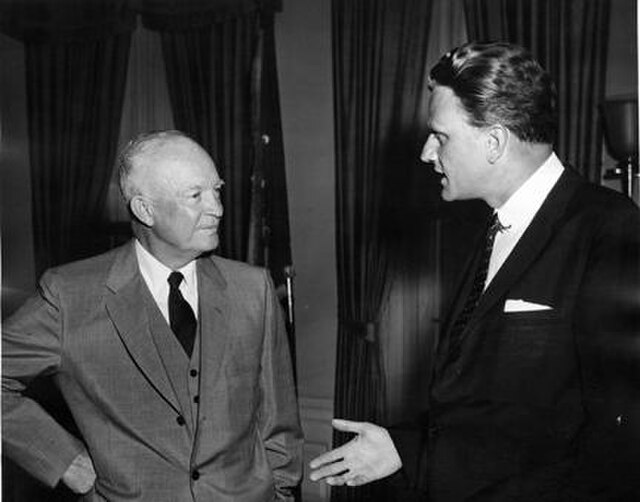
No figure did more to normalize this fusion than Billy Graham. Rising to national prominence in the 1950s, Graham brought evangelical Christianity into the center of American public life, cultivating close relationships with presidents from Dwight D. Eisenhower to Richard Nixon. He regularly warned of “godless communism,” casting the Cold War as a spiritual battle and reinforcing the idea that American power and Christian faith stood on the same side.
Graham promoted the belief that the United States stood in a special relationship with God, an idea that more overtly political movements could later weaponize.
Into this environment stepped the John Birch Society, founded in 1958 by candy magnate Robert W. Welch Jr.. The J.B.S. advanced a sweeping conspiratorial worldview, claiming that President Dwight D. Eisenhower functioned as a willing agent of communism, that the civil rights movement operated as a Soviet front, and that institutions like the United Nations formed part of a coordinated plan for global control. Welch’s infamous “The Politician” manuscript circulated privately among members, laying out the charge that the highest levels of the U.S. government had already been infiltrated.
The Society grew rapidly, building a national network of local chapters, bookshops, and lecture circuits. At its height in the early 1960s, it claimed tens of thousands of members and a far larger orbit of sympathizers, with influence that reached into suburban communities, school boards, and Republican Party politics.
The John Birch Society actively cultivated relationships with evangelical pastors and lay networks, promoting “Christian morality” as an ideological defense against communism. It organized chapters, distributed pamphlets and films, and mobilized campaigns to remove books from libraries, oppose sex education, fluoridation, and the United Nations. These efforts hardened into a durable playbook for grassroots culture-war politics: local, relentless, and framed as a moral crusade.
Its influence was so pronounced that it triggered a backlash within the conservative movement itself. In the early 1960s, William F. Buckley Jr. used his magazine National Review to publicly denounce Welch and marginalize the Birchers, arguing that their conspiratorial extremism threatened the credibility of modern conservatism. This internal purge marked a turning point: Buckley’s movement sought respectability by distancing itself from overt paranoia while quietly retaining many of the same anti-communist and culture-war themes.
The John Birch Society carried forward earlier currents of conspiratorial and reactionary extremism while translating them into a more organized, media-savvy form. It laid critical groundwork for the emergence of the Christian Right, connecting mid-century anti-communist activism to the televangelist empires and national mobilizations that would follow in the 1970s and 1980s.
Apocalyptic Offshoots and the Cult of Armed Dominion
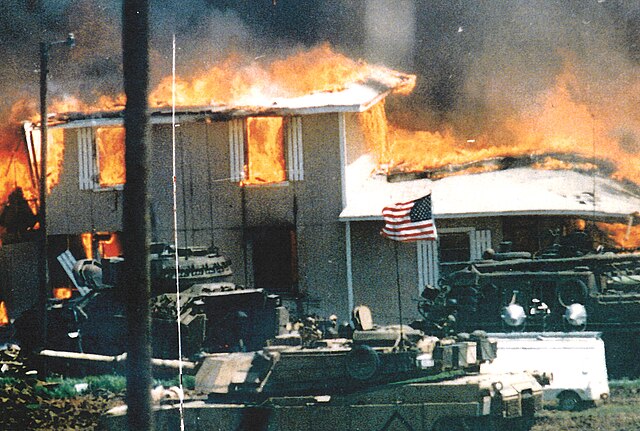
Christian Nationalism continues to generate apocalyptic splinter movements that push belief into militancy. The Branch Davidians, an offshoot of the Seventh-day Adventist Church, transformed a compound outside Waco into a fortified center of end-times prophecy under David Koresh. Koresh claimed unique authority to interpret Revelation, stockpiled weapons, and imposed total control over his followers’ lives, including coercive sexual arrangements framed as divine command. The 1993 siege ended in fire and the deaths of more than 80 people, including dozens of children. Waco became a martyr narrative within the far-right imagination, reinforcing the belief that the federal government wages war against “true believers.” That event, along with confrontations at Ruby Ridge, helped radicalize figures like Timothy McVeigh, and echoed decades later in movements that culminated in the January 6 United States Capitol attack.
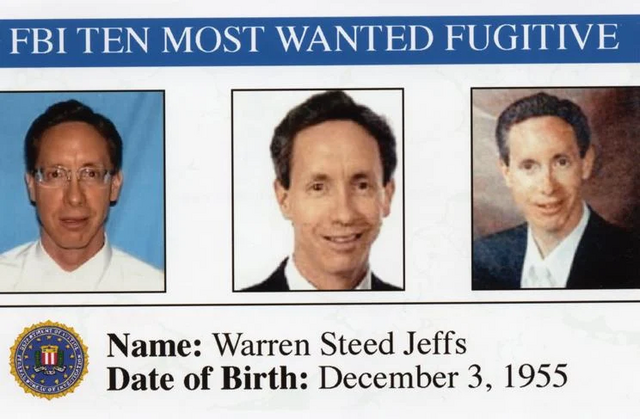
The Fundamentalist Church of Jesus Christ of Latter-Day Saints (FLDS), under Warren Jeffs, exercised near-total control over entire towns along the Arizona–Utah border, operating as a theocratic system in which housing, family structure, and civic life flowed through church authority. Jeffs’ conviction for the sexual abuse of minors exposed a regime in which girls were assigned as “spiritual wives,” families were broken apart, and obedience was enforced as divine law. Offshoot leaders such as Samuel Bateman carried similar practices into the 21st century, coercing followers into surrendering underage girls in cases that resulted in federal convictions.
Today, new enclaves shaped by the same fusion of theology, identity, and exclusion. The Return to the Land project in Arkansas promotes a deliberately whites-only settlement, restricting membership by ancestry and advancing a vision of racially and religiously homogeneous community life. Other insular sects, such as the Two by Twos, have been under investigation for systemic abuse, with survivors describing networks in which authority figures shield perpetrators and silence victims. Across parts of Idaho, Montana, and Oregon, similar dynamics appear in smaller, less visible communities that blend apocalyptic theology, survivalism, and armed self-defense, often organized around charismatic leaders who claim divine sanction.
In Warrior, Alabama. Robin D. Bullock and Robin R. Bullock lead Church International, a ministry that blends charismatic prophecy, conspiratorial political narratives, and prosperity-inflected theology. In recent years, the church has purchased at least 21 properties valued at more than $8 million, including commercial buildings and entire blocks, establishing a substantial footprint in the local economy. The stated plan to lease these properties to businesses places the ministry in a position to shape, not only spiritual life, but also economic activity within the town.
The Reagan Marriage: Evangelicals Wed the State
By the late 1970s, the infrastructure for Christian nationalist politics was fully formed. Jerry Falwell’s Moral Majority, Pat Robertson’s Christian Coalition, and a network of Reconstructionist and charismatic dominionist thinkers, including R.J. Rushdoony, Francis Schaeffer, and C. Peter Wagner, turned private belief into political warfare. Falwell’s organization registered millions of new voters, raised tens of millions of dollars, and built a national campaign apparatus. Robertson’s Christian Coalition pioneered grassroots voter guides, phone banks, and coordinated lobbying, transforming localized concerns into national political power. Televangelist broadcasts, radio shows, and print newsletters amplified the message, framing political issues: abortion, school prayer, pornography, “family values,” as moral imperatives.
The decisive political marriage came in the Reagan years. In 1980, Reagan courted the newly mobilized evangelicals at the National Affairs Briefing, promising to defend “the American family” and railing against IRS scrutiny of segregation academies. Falwell’s machine delivered millions of votes. In return, Reagan granted the Christian Right legitimacy, appointments, and a permanent seat at the Republican table. The bargain was simple: evangelicals would vote Republican; the GOP would advance their cultural agenda. Dominion theology, explicitly calling for Christians to seize the “seven mountains” of culture and impose biblical law, became the operating system. While extreme Reconstructionists fantasized about stoning adulterers or executing homosexuals under Mosaic code, the mainstream adopted a softer version: America as a Christian nation whose laws must reflect “biblical values.”
Satanic Panic, Censorship, and Cultural Warfare
The “Satanic Panic” of the 1980s was a moral hysteria fueled by Christian Right networks. Heavy-metal records were accused of backward masking and occult brainwashing. Dungeons & Dragons was blamed for teen suicides. Day-care workers were prosecuted on wildly fabricated claims of ritual abuse, most famously in the McMartin preschool case, where teachers endured years of investigation over allegations of secret tunnels, satanic ceremonies, and sexual abuse, none of which were ever substantiated. The Parents Music Resource Center pushed album-stickering and congressional hearings, while televangelists and radio preachers like Bob Larson launched crusades against rock music, occult practices, and “demonic influence.” Larson, a relentless self-promoter, built a media empire from fear. His lectures, books, and radio appearances amplified and exploited the panic.
Young people, artists, and ordinary citizens were shamed, censored, and even criminalized for alleged occult connections. The West Memphis Three, three teenagers wrongly convicted in the 1990s of ritual murders, exemplify how the hysteria extended beyond moral panic into devastating legal injustice. The media and televangelist campaigns, later captured in documentary and video series like They Sold Their Souls for Rock and Roll, show how fear and spectacle were systematically used to control cultural expression. The goal was control: to censor, shame, and subordinate anything that challenged the vision of a Christianized America.
This moral panic laid the groundwork for the next stage of Christian Nationalist aggression: a culture in which apocalyptic rhetoric, perceived moral threats, and divine authority justify real-world violence: from anti-abortion attacks to armed dominionist militias.
Abortion Terror: Bombs, Bullets, and the War on Women
Christian Nationalism’s violence finds its sharpest expression in the crusade against abortion. Since the 1970s, extremists have carried out at least eleven murders, forty-two bombings, two hundred arsons, as well as countless assaults on clinics and providers. Eric Rudolph’s 1998 attack on the New Woman All Women Health Care clinic in Birmingham, Alabama and the 1996 Atlanta Olympics epitomized the lethal combination of ideology and action. The Army of God claimed responsibility for multiple clinic bombings and openly praised shooters.
On March 10, 1993, Michael Griffin gunned down Dr. David Gunn outside a Pensacola clinic. This was the first targeted killing of an abortion provider in the United States. Similar assassinations followed: Dr. John Britton in 1994, Dr. Barnett Slepian in 1998, and Dr. George Tiller in 2009. These murders were expressions of a theology of dominion and chosenness, justified by the belief that Christian rule must extend to women’s bodies.
The broader agenda is systemic: overturn Roe v. Wade, gut reproductive rights, and roll back fundamental autonomy. Forced birth, denied contraception, and restricted divorce rights are mechanisms of subjugation, enforcing a biblical patriarchy that reduces half the population to second-class status.
Christian Nationalist violence also extends beyond abortion. The Westboro Baptist Church, founded by Fred Phelps, has become infamous for its relentless campaigns of harassment and hate, picketing funerals and public events with messages that demonize LGBTQ+ people, military members, and anyone outside their rigid moral vision. Like the anti-abortion extremists, their campaigns operate under the same ideology of divine chosenness, moral absolutism, and public intimidation.
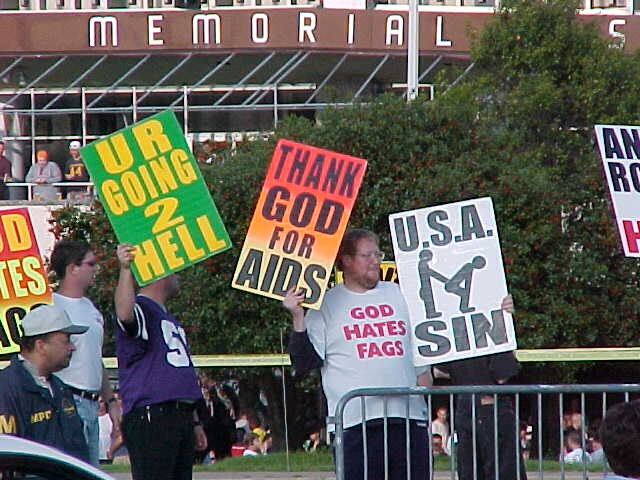
That rhetoric continues to surface in more mainstream political spaces. Doug Wilson of Christ Church publicly called on God to “take out” Texas state representative James Talarico, a Democrat and outspoken Christian critic of Christian nationalism. The language may stop short of direct action, but it draws from the same well: the belief that political opponents stand in defiance of God and can be treated as enemies to be removed. This is domestic terrorism masquerading as “pro-life” activism and moral guardianship. It continues to shape policy, politics, and cultural discourse in the United States today.
Chosenness Reframed: White Christian Vanguard
The idea of divine chosenness, once a personal or spiritual claim, was remade as a mandate for social and political supremacy. White evangelicals became God’s anointed vanguard, tasked not only with moral stewardship but with enforcing their vision of the world. Everyone outside their covenant: non-Christians, people of color, LGBTQ+ individuals, and dissenting believers, was framed as either a target for conversion, a subordinate to be controlled, or an enemy to be removed.
Abortion providers were assassinated, children and teachers terrorized under the pretense of occult panic, entire towns bought up by apocalyptic cults, and civil rights advances recast as threats to God’s chosen people. Chosenness became a license for domination, coercion, and exclusion.
By linking spiritual identity to racial and political hierarchy, Christian Nationalism has transformed personal belief into a mechanism of power. The “white Christian vanguard” was now positioned as the guardian of the nation itself, empowered to reshape society according to biblical law, to mobilize violence and intimidation, and to normalize policies that privileged their community while undermining pluralistic governance.
In effect, the ancient architecture of hierarchy, divine right, and chosenness that began with Puritan covenant theology had been fully Americanized and weaponized. What was once a personal faith became a political creed, a social code, and, in the hands of extremists, a tool of terror.
The Modern Assault: Project 2025, January 6, and the Fox Already in the Henhouse
Christian Nationalism is no longer content with influence; it now has a governing agenda. Project 2025, the Heritage Foundation’s 900-page blueprint for the next Republican administration, reads like a Christian nationalist wish list: dismantle the administrative state, purge “woke” civil servants, criminalize abortion and gender-affirming care, and infuse every federal agency with a “biblical worldview.” It treats the safeguard of the separation of church and state as a mistake to be corrected. The January 6 insurrection was its dress rehearsal: rioters carrying crosses and Christian flags, praying in the Senate chamber, convinced they were storming the temple to restore God’s anointed leader. Polls consistently show that those who score highest on Christian nationalist beliefs are more likely to justify political violence, reject election results, and see non-Christians as second-class citizens.
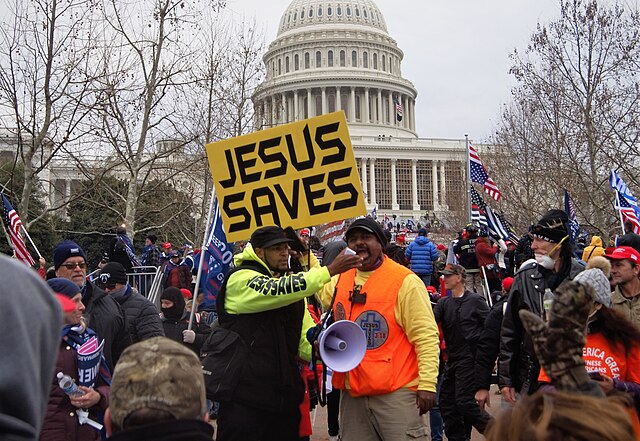
The fox is in the henhouse. In the Trump administration, self-identified Christian nationalists and their allies occupy key posts. Press Secretary Karoline Leavitt frames the presidency as a “spiritual battle” and credits divine intervention for Trump’s survival. Paula White-Cain, a high-profile televangelist and unapologetic promoter of prosperity theology, served as a close spiritual advisor, effectively shaping the administration’s faith messaging. The creation of the White House Faith Office formalized the effort to infuse government with a Christian nationalist agenda, including promises to “go after” critics of Christianity.
Before his assassination, Charlie Kirk of Turning Point USA openly defended Christian nationalism as the rightful inheritance of a Christian nation and attacked critics as traitors to the faith. The administration’s faith office, policy shop, and judicial appointments are stacked with dominionist sympathizers.
TurningPoint USA has become one of the most powerful conservative youth movements in the United States. Founded in 2012 by Charlie Kirk as a campus advocacy organization, TPUSA now claims chapters at over 3,500 high schools and colleges nationwide. Under Kirk’s leadership, it raised nearly $389 million from donors and foundations by 2023, with annual revenues around $85 million. Its affiliate networks, including Turning Point Action and Turning Point Faith, extend its reach into political organizing, voter mobilization, and conservative religious engagement.

Attendees at the Clemson University tour stop of the 2021 Turning Point USA college tour at Memorial Auditorium at Tillman Hall in Clemson, South Carolina. (Source: Wikimedia Commons)
TPUSA has been instrumental in mobilizing young conservatives and aligning them with Republican strategies, organizing voter outreach, culture-war campaigns, and messaging efforts that have influenced election outcomes. Annual events like AmericaFest have drawn tens of thousands of mostly college-aged supporters, celebrating President Trump and reinforcing Christian nationalist ideology. Immediately following Kirk’s assassination in 2025, support surged, with thousands of new chapter requests and renewed pledges from major donors. TPUSA continues to train and activate a new generation of political actors, embedding Christian nationalist influence deeply within Republican and youth politics.
Christian Nationalism is no longer content with influence alone; it has a governing agenda, a networked youth movement, and the resources to shape policy and culture at multiple levels of American society.
This movement elevates power over the core teachings of Christianity. It weaponizes the monarchical metaphors dissected in the first essay: Lord, Kingdom, chosen servants, while ignoring every biblical command to welcome the stranger, care for the poor, and render unto Caesar what is Caesar’s. Its environmental indifference, cruelty toward immigrants and LGBTQ+ people, attempts to roll back hard won freedoms for women and minorities, as well as its contempt for democratic norms all flow directly from the ancient architecture of hierarchy and divine-right rule. What began in Puritan covenants, was sharpened by dominion theology, and reinforced through decades of political machinery has now taken form as a full-fledged political strategy to bend the federal government to a sectarian, exclusionary vision of America.
Time to Crush It
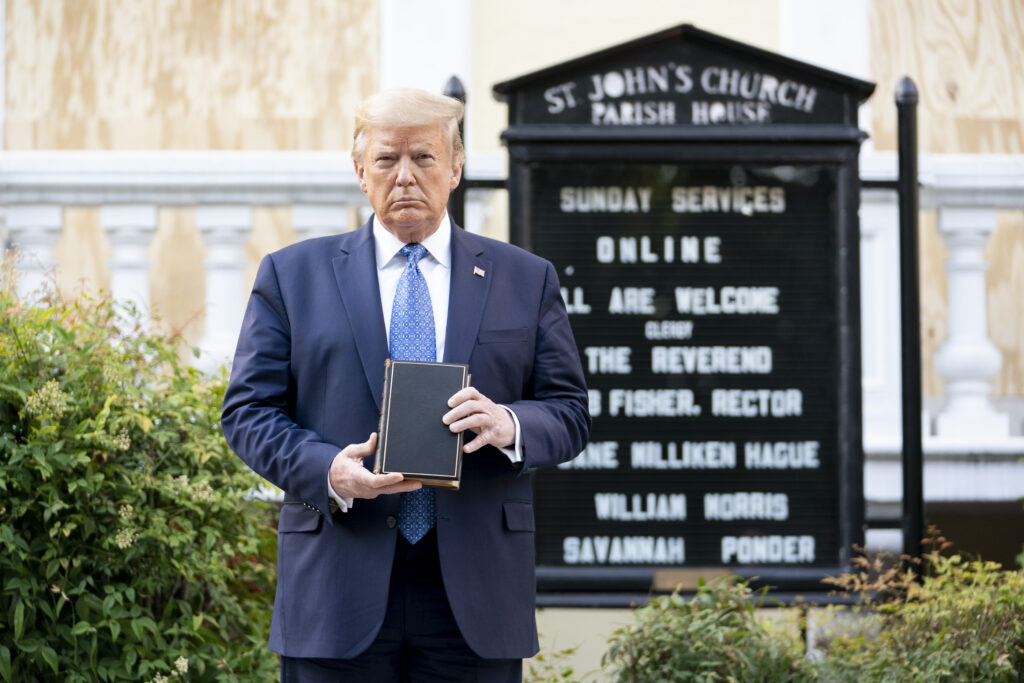
Christian Nationalism is not a legitimate expression of faith. It is a political ideology holding a Bible. It has no claim on the public square, no right to hijack public schools with Ten Commandments posters, no mandate to turn the United States into a twenty-first-century theocracy. The republic was founded on Enlightenment principles precisely to prevent any sect from claiming divine ownership of the state.
Rejecting chosenness as supremacy, kingship as governance, and myth as law is the work of every citizen who values pluralistic democracy. The first essay showed where the ideas came from. This one shows what happens when they are allowed to seize the ballot box and the White House. Belief can remain private. Power must remain secular.
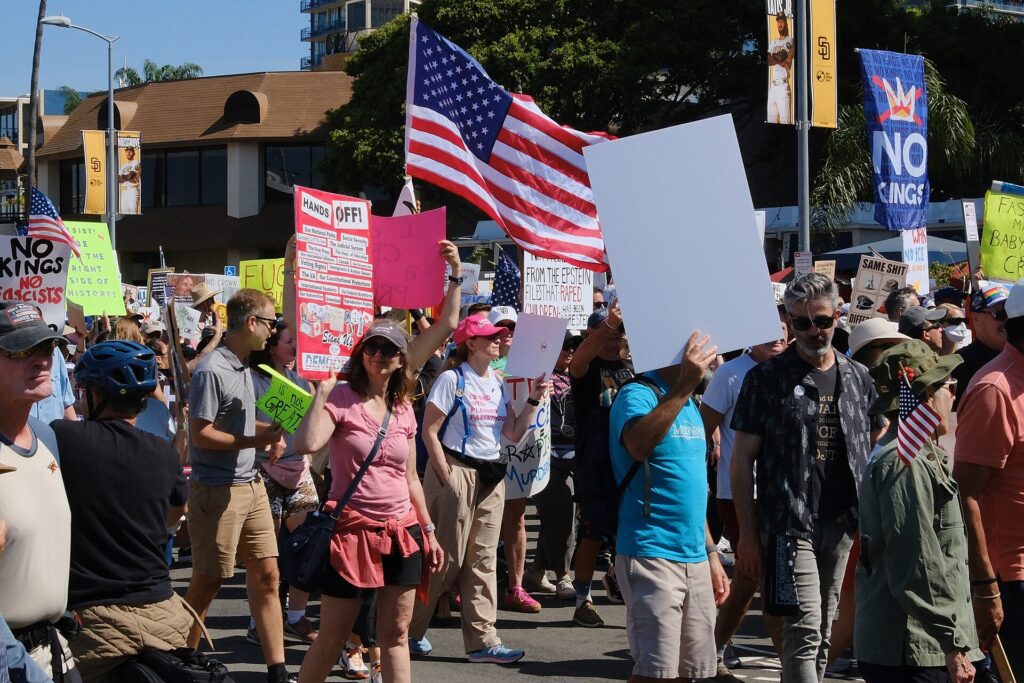
Don’t let the conversation stop here. We’re tearing down the walls and continuing the debate over on Blue Sky – @thebohemianstar.com. If you’re still lingering in the old spaces, you can also join our private inner circle over at The Bohemian Star Salon on Facebook to talk rock mythology, occult history, and alternative realities with the rest of the crew.
Discover more from The Bohemian Star
Subscribe to get the latest posts sent to your email.