The Art of Les Nabis.
This article originally appeared in Ashé Journal, Vol 4, Issue 1, Spring 2005.
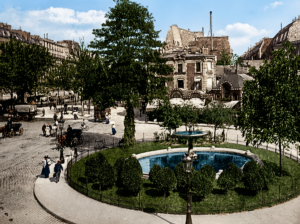
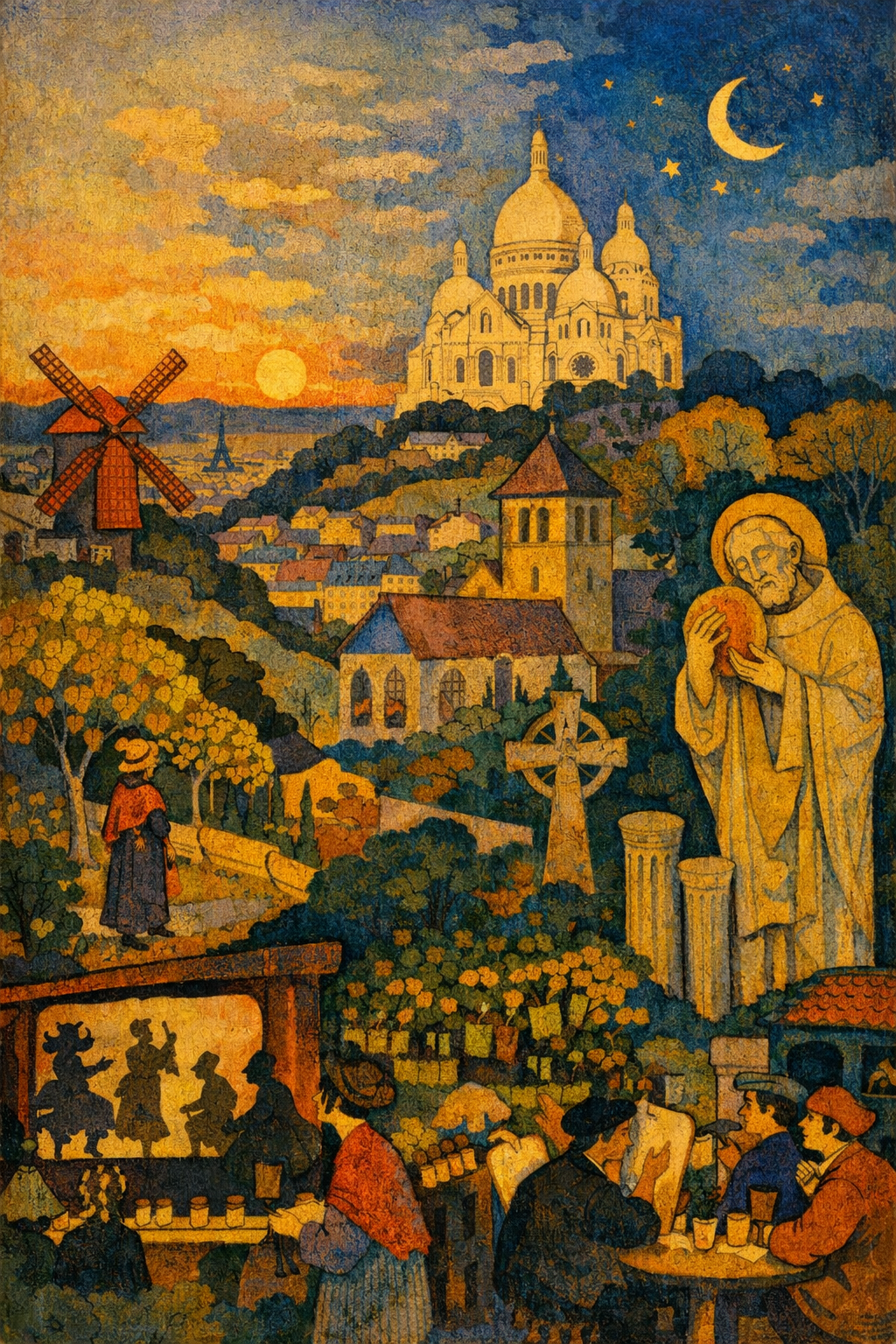
There are places of great power. On the right bank of the Seine, Montmartre gazes down over the rest of Paris. This hill has long served as a crucible of creativity and a refuge for visionaries across eras. Tradition holds that Montmartre was once a sacred site for the Druids of ancient Gaul, who may have performed rituals atop its heights. During the Roman occupation, the hill—known then as Mons Martis or Mons Mercurii—hosted temples: one dedicated to Mars, god of war and a patron of the conquering forces, and another to Mercury, god of trade, travel, and communication. Archaeological traces, including temple foundations near the Moulin de la Galette and another close to the Sacré-Cœur and Saint-Pierre church, along with remnants like Roman columns in Saint-Pierre de Montmartre, confirm this pagan heritage.
From Pagan Temples to Christian Martyrdom
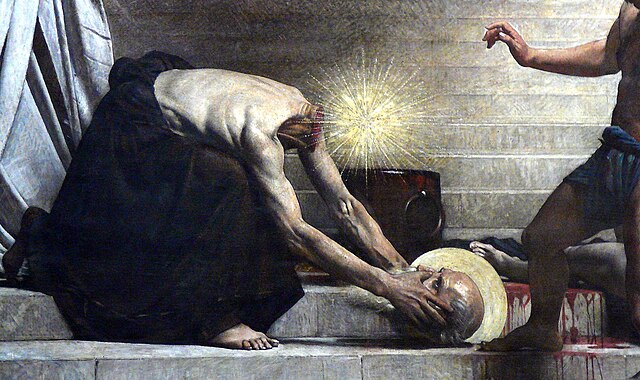
Christened with the blood of a saint, Montmartre literally means “Mountain of the Martyr.” Saint Denis (also known as Dionysius), the first Bishop of Paris, was martyred there around 250–272 CE during Roman persecutions under Emperor Valerian or Decius. According to the popular legend recounted in Jacobus de Voragine’s The Golden Legend, after being beheaded, Saint Denis miraculously picked up his head and carried it several miles (preaching a sermon on repentance all the while) before finally collapsing at the site now known as Saint-Denis, where a shrine was erected. The Abbey of Saint-Denis was founded around 630 by Dagobert I, the most powerful Merovingian king, and became the traditional burial place for French royalty thereafter.
Though long dismissed as pious legend, the association of Montmartre with Denis’s martyrdom gained credence in 1611 when Abbess Marie de Beauvilliers discovered a crypt beneath the martyr’s chapel, leading to the establishment of a priory. These buildings were auctioned off and demolished during the French Revolution in 1794 to make way for plaster quarries. Earlier, in the 12th century, Louis VI (persuaded by his wife Adelaide of Savoy) founded a Benedictine convent on the site of an 11th-century monastery. In 1147, Louis built the Church of Saint-Pierre and granted large lands to the nuns. The abbey’s vineyards and fields yielded rich harvests, making it one of the wealthiest in the kingdom. These same vineyards would later fuel a bohemian renaissance, as cheap wine attracted artists and free spirits.
Vines, Windmills, and the Seeds of Bohemia
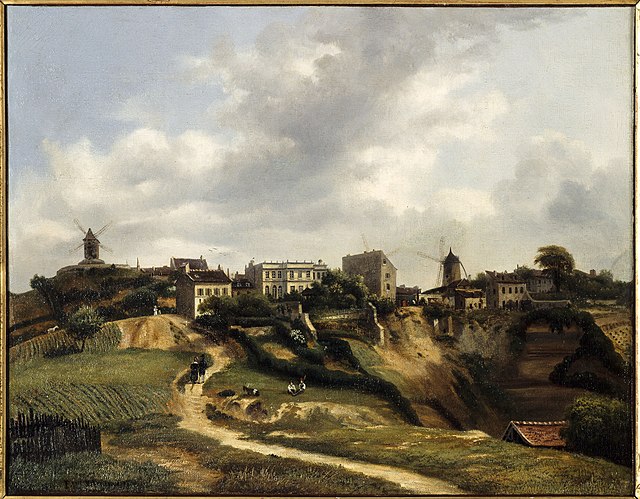
The vineyards and iconic windmills created a pastoral contrast to the gritty urban sprawl of Paris below. Poet Gérard de Nerval praised it in 1846 as “the finest panorama in the vicinity of Paris,” and Pierre-Auguste Renoir settled there in 1875. If Paris is “The City of Light,” Montmartre has often served as its beacon.
On the Feast of the Assumption of Mary, August 15, 1534, Ignatius of Loyola and six companions—Pierre Favre (the only ordained priest), Francis Xavier, Diego Laínez, Alfonso Salmerón, Nicolás Bobadilla, and Simão Rodrigues—walked from the Latin Quarter to the secluded crypt of the Martyrium (Chapel of the Martyrs) on Montmartre, tied to the legendary site of Saint Denis’s beheading. In this underground chapel beneath what is now near the Church of Saint-Pierre (then a quiet village church), Favre celebrated Mass. Kneeling before the altar, the group pronounced their vows of poverty and chastity one by one in clear voices, with a pledge to undertake a pilgrimage to Jerusalem (later formalized with obedience when they formed the Society of Jesus, or Jesuits, approved by Pope Paul III in 1540). Scholars note that Ignatius’s exposure to humanism at the Collège Sainte-Barbe shaped the Jesuits’ educational philosophy, emphasizing rigorous inquiry, adaptability, and a synthesis of faith and reason—qualities that echoed in the humanistic currents influencing later Parisian art, literature, and theater.
During the Second Empire under Napoleon III, Haussmann’s grand rebuilding of Paris displaced many residents outward. Montmartre, still officially outside city limits and thus exempt from municipal taxes, offered cheap wine from the old abbey vineyards. This drew bohemians, artists, and radicals seeking freedom from urban constraints.
The Paris Commune
The Franco-Prussian War’s defeat in 1871 unleashed long-simmering revolutionary energies. After the armistice allowed Prussian occupation of Paris (confined to limited areas by defiant Parisians), the provisional government feared armed citizens and sent troops to seize National Guard cannons. The Guard refused, and the regular army retreated to Versailles, declaring war on the capital. On March 28, 1871, the Paris Commune was proclaimed. It abolished conscription in favor of a citizen National Guard, separated church and state (nationalizing church property), suspended debts, and ended interest on loans. The Communards encompassed anarchists, socialists, republicans, and diverse radicals united in defiance.
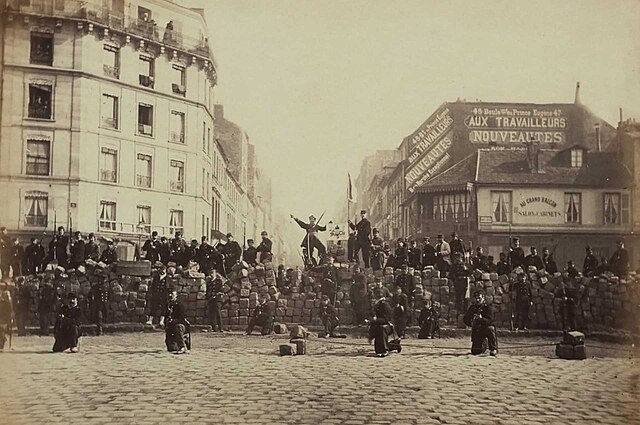
Versailles forces attacked on April 2; by May 21, they entered the city. The suppression was brutal: during the “Bloody Week” (Semaine Sanglante), troops massacred unarmed civilians, with estimates of 10,000–35,000 killed (many in summary executions targeting working-class accents or neighborhoods like Montmartre). Hundreds of Communards fled to Montmartre’s chalk quarries and catacombs; soldiers dynamited entrances, entombing them alive.
In 1875, the foundation stone for the Basilica of the Sacré-Cœur was laid atop the butte to commemorate the Third Republic’s restoration and honor victims of the Commune (though critics saw it as a conservative rebuke). Its Romanesque-Byzantine style features a triple-arched portico crowned by bronze equestrian statues of national saints Joan of Arc and Louis IX, overlooking Paris as a symbol of republican resilience.
Many historians view the short-lived Commune as a triumph of self-organization, where Parisians—betrayed by their government’s war failures—asserted self-governance and defiant independence. This spirit of liberty propelled rapid artistic evolution in visual, musical, literary, and theatrical realms, defining the fin de siècle mood.
The Birth of the Fin de Siècle Spirit
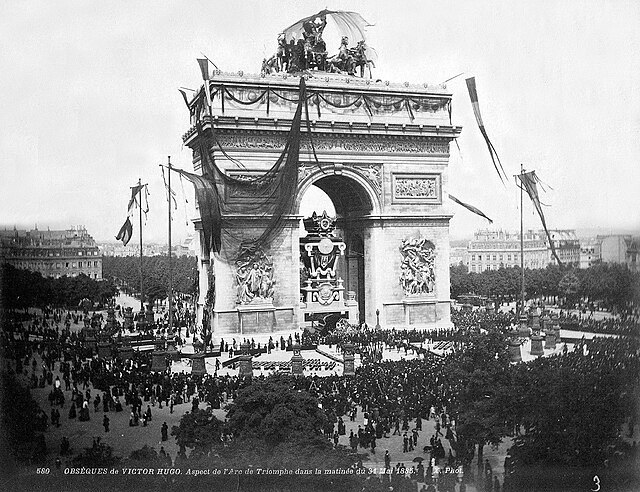
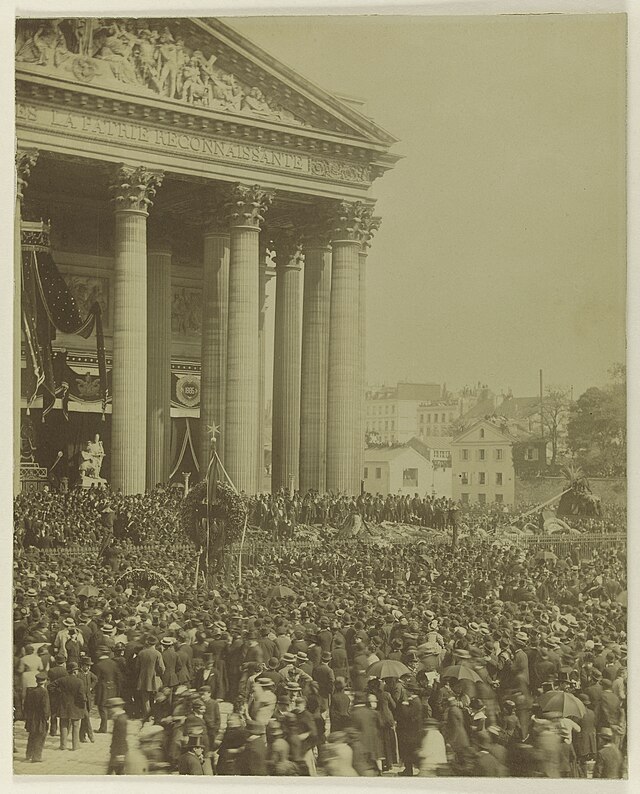
In May 1885, Victor Hugo died, marking the Romantic era’s close. Revered by Republicans and Socialists, the humanist willed 50,000 francs to the poor and rejected church prayers, declaring: “I ask for a prayer from all living souls. I believe in God.” Children in Grecian costumes kept vigil over his body beneath the Arc de Triomphe; over two million lined the streets for his procession to the deconsecrated Panthéon, rededicated to great men.
Hugo’s passing ushered in Symbolism, guiding the avant-garde toward Art Nouveau, Impressionism, and Post-Impressionism. Western traditions absorbed Eastern influences (e.g., Japanese prints), while artists explored textiles, glass, and lithography beyond easel painting. Montmartre fused political, mystical, and artistic currents, becoming the epicenter of decadent art and entertainment. Icons mingled at venues like Le Chat Noir and the Cabaret des Quat’z’Arts.
Le Chat Noir opened November 18, 1881, when painter Rodolphe Salis persuaded poet Émile Goudeau to relocate Les Hydropathes—an eclectic society of writers, artists, and performers meeting since 1878—from the Latin Quarter. The Hydropathes had published their bimonthly journal L’Hydropathe for 18 months, formalizing cafés as artistic venues. Within two months, Le Chat Noir launched its own illustrated journal, featuring Adolphe Willette, Caran d’Ache, and Théophile-Alexandre Steinlen’s wordless stories blending macabre and infantile themes. The Rabelaisian décor matched this bawdy spirit; the journal boasted: “The Chat Noir is the most extraordinary cabaret in the world. You rub shoulders with the most famous men of Paris, meeting there with foreigners from every corner of the world.” Prosperity allowed relocation to larger premises by 1885. In fall 1885, George Auriol and Henry Somm built a puppet theater; Somm’s one-act Berline de l’émigré, set in a family-run lavatory full of puns and buffoonery, evoked Gargantua and Pantagruel. This evolved into shadow theater, the cabaret’s signature attraction until its 1897 closure after Salis’s death.
The Cabaret des Quat’z’Arts, founded by François Trombert in 1893, embodied avant-garde interdisciplinarity, uniting artists, composers, musicians, performers, poets, and illustrators in direct public dialogue. Audiences participated actively, blurring creator and spectator. It continued into the 20th century, hosting 64 marionette performances of Alfred Jarry’s Ubu Roi starting November 1901 (originally staged live in 1896 at Théâtre de l’Oeuvre with sets by Paul Sérusier and Henri de Toulouse-Lautrec). Jarry preferred puppets for its grotesque king; attractions like the collage wall-journal “Le Mur” attracted to the attention of Pablo Picasso.
The Bateau-Lavoir and the Birth of Modern Art
In the early 1900s, artists congregated at Le Bateau-Lavoir (“The Laundry Boat”), a Montmartre tenement where Picasso resided 1904–1909, developing Cubism. It hosted Guillaume Apollinaire, Henri Matisse, Jean Cocteau, Gertrude Stein, and others; Picasso organized a 1908 banquet for Henri Rousseau there. Montmartre inspired Van Gogh, Renoir, Degas, Matisse, Odilon Redon, and more.
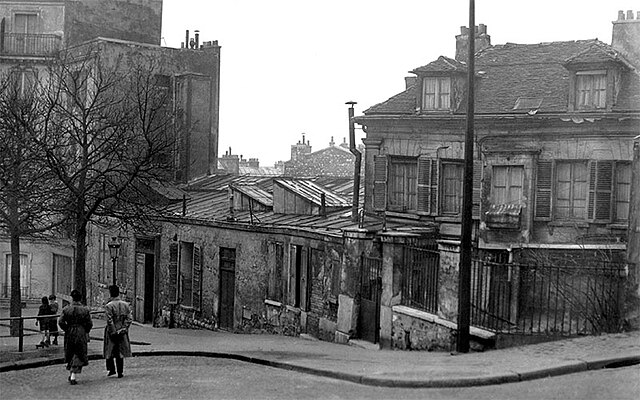
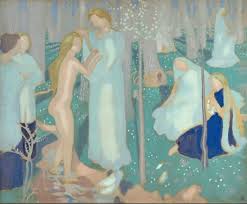
Other famous names took inspiration from Montmartre and the unique spirit manifest there during the fin-de-siecle: Van Gogh, Renoir, Degas, Matisse, Redon and others. Yet a sublime, esoteric dimension emerged amid the avant-garde. Paul Gauguin’s Synthetism influenced a group known as Les Nabis (“The Prophets” or “The Inspired”).
Les Nabis: Prophets of Form and Color
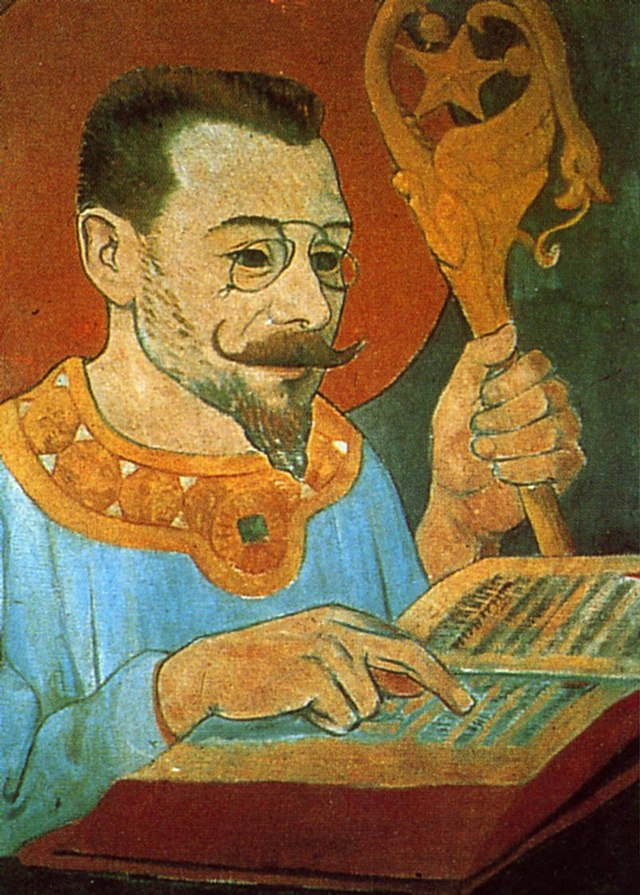
Maurice Denis famously declared: “It is well to remember that a picture—before being a battle horse, a nude woman, or some anecdote—is essentially a plain surface covered with colors assembled in a certain order.” (The metaphysical implication is profound: before categorization, any object is merely a unique arrangement of elements; meaning is imposed, not inherent.)
The Talisman and the Birth of Synthetism
In October 1888, Paul Sérusier returned to Académie Julian with The Talisman (also Landscape in the Bois d’Amour), a cigar-box lid landscape painted under Gauguin’s guidance at Pont-Aven. Gauguin urged exaggeration: pure flat colors, symbolic decorative logic over imitation. This embodied Synthetism—emotional interpretation prioritizing color, line, and form; memory over direct observation; flat shapes; symbolism for abstract ideas. Art became the artist’s visionary projection, infusing mysticism via personal will.
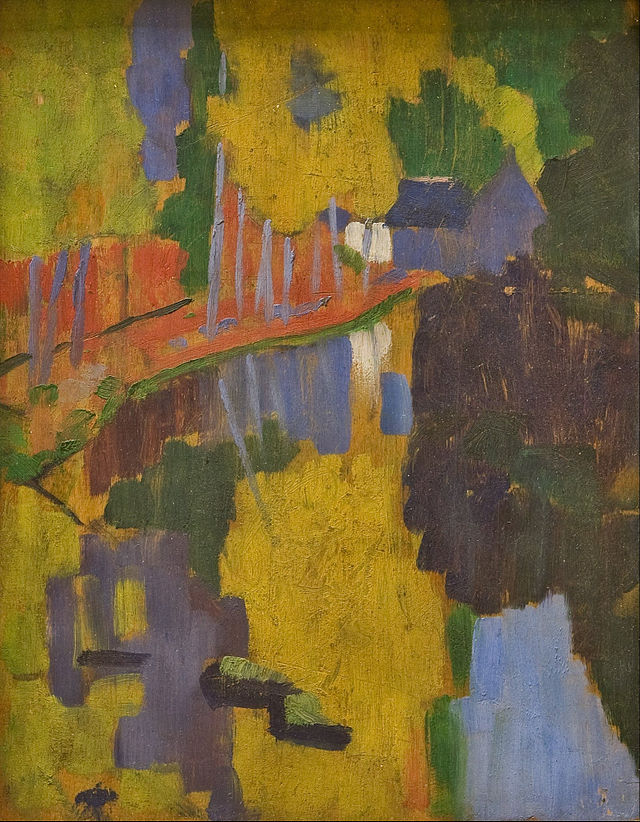
Sérusier shared it with friends, sparking debate. With Pierre Bonnard, Maurice Denis, Henri-Gabriel Ibels, and Paul Ranson (eventually a dozen, associating with Cézanne and Redon), they formed Les Nabis. Poet Henri Cazalis (dubbed l’Hindou du Parnasse contemporain for his Oriental mysticism, Kabbalah interest, and Eastern philosophy) named them; he was a Mallarmé confidant influencing their Symbolist leanings.^1
Mystical influences varied: speculation surrounds occultism, spiritualism, and Theosophy’s role. Beliefs ranged from Theosophy (Ranson and Sérusier) to orthodox Christianity, Buddhism, and anarchism. Mystics like Ranson and Sérusier contrasted with Vuillard and Bonnard, who avoided theoretical mysticism, focusing on cabaret sets and illustrations for Revue Blanche.
Unity lay in art’s role: providing continuity and unity. Their credo: “simplification of form and exaltation of color.” They stylized everyday objects (wallpapers, fabrics, tapestries, stained glass, furniture, screens, stage sets), integrating art into life. Influenced by Japanese prints and modern techniques, they sought beauty beyond nature, transforming the ordinary without corrupting its mystery.
Mysticism, Philosophy, and Artistic Brotherhood
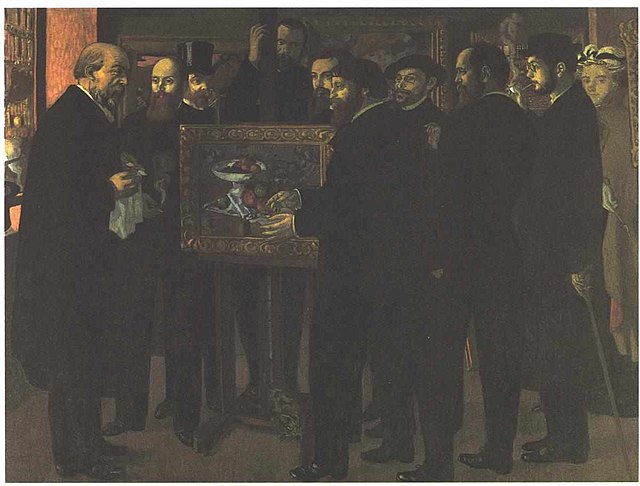
Organized around monthly dinners (1888–1896) at L’Os à Moëlle café then Ranson’s apartment, members wore Oriental costumes or white tunics, presented recent “icones,” discussed work, theater, literature (Mallarmé, Maeterlinck, Baudelaire). The presiding Nabi raised a crozier-like staff: “Sounds, colors, and words have a miraculously expressive power beyond all representation and even beyond the literal meaning of the words.”
Ranson and wife Marie-France (“the light of the temple”) hosted Saturday gatherings at “Le Temple” (Boulevard du Montparnasse), an “ergasterion” (Greek: workplace) alongside Georges Lacombe’s Versailles studio. Correspondence ended: D.T.P.M.V.E.M.P. (“Dans ta paume mon verbe et ma pensée”—In your palm my word and my thought). Ranson assigned soubriquets: Sérusier “Le Nabi à la barbe rutilante,” Bonnard “Le Nabi Japonard,” Denis “Le Nabi aux belles icones,” Lacombe “Le Nabi Sculpteur.”
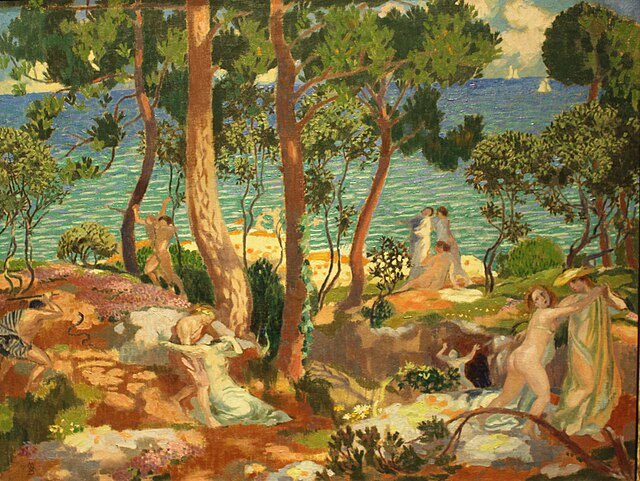
Their shared style initially subdued individuality while preserving vision. By 1894, Sérusier lamented to Jan Verkade that Vuillard, Roussel, and Bonnard’s personalities eroded the collective aesthetic. Vuillard, Roussel, and Bonnard later diverged; Ranson, Sérusier, and Lacombe persisted, influencing Académie Ranson (opened 1908). After Ranson’s 1909 death, Marie-France, Denis, and Sérusier sustained it; Sérusier explored the golden ratio.
Les Nabis exemplify Montmartre’s creative evolution: embracing mystical, mythological, and aesthetic schools.
This is the story of a place and time where genius met genius, forging inspiration for those embracing human endeavor. It marks where one age dies and another is born.
Where One Age Ends and Another Begins
As Hillel Schwartz observes in Century’s End:
The new phrase, insisted Berlin journalist and philologist Fritz Mauthner in his 1890/91 essay on fin de siècle as adjective and presumptive noun, had begun as a rather empty reference to some vague anticipations of the century’s end, but the very act of giving a name to those anticipations had made possible a way of thinking about one’s time that had been unavailable before. Originally an allusion to indeterminate feelings, fin de siècle had become an active agent for historical thought. Mauthner was developing a philosophy of language, of which Ludwig Wittgenstein would soon be the peerless exponent, that knowledge and perception are tightly interlaced with language, and that their horizons expand only and conjointly with new acts of naming. Himself beset with inescapable feelings of culmination and threshold, Mauthner was impressed that fin de siècle had arrived a decade in advance of the next century. He was eager to ‘outfit for the twentieth century’ by rethinking the common past, which meant reconsidering the language in which that past had been cast. (Schwartz, 165–166)
Les Nabis were prophets of this symbolic and aesthetic rethinking. Amid an age of “the best of times and the worst of times,” they summoned light from encroaching darkness, birthing a century of world war and global connectivity. Their legacy endures through artists who, from this Parisian hillside perch, cast illumination into the world.
References (Chicago author-date style, modernized and verified; original web sources archived or replaced with stable equivalents where possible)
Buisson, Sylvie, and Christian Parisot. 1996. Paris Montmartre. Paris: Pierre Terrail.
Schwartz, Hillel. 1990. Century’s End: A Cultural History of the Fin de Siècle from the 990s through the 1990s. New York: Doubleday.
Silverman, Debora L. 1989. Art Nouveau in Fin-de-Siècle France: Politics, Psychology, and Style. Berkeley: University of California Press.
Whitfield, Sarah, and John Elderfield. 1998. Bonnard. New York: Harry N. Abrams.
(Note: Original web citations from 2004 are outdated; for Nabis, consult stable sources like TheArtStory.org or Musée d’Orsay entries.)
^1 Cazalis’s nickname reflected his Orientalist leanings amid Parnassian poets, emphasizing form over emotion.