
Introduction
The intersection of government intelligence and the occult is a pragmatic marriage of utility. Both realms operate in the shadows, relying on secrecy, coded language, symbolic manipulation, and the systematic shaping of human perception and belief. From Renaissance courts to Cold War laboratories and contemporary information warfare, intelligence agencies have repeatedly weaponized esoteric movements as operational cover, psychological warfare tactics, and instruments of political influence.
This relationship is rooted in a shared infrastructure and similar methodologies. Secret societies offer pre-vetted global networks bound by oaths of silence. Occult traditions provide sophisticated frameworks for altered states, misdirection, narrative control, and the mastery of hidden knowledge. These techniques transfer directly to espionage and spycraft. In an arena where the end justifies the means, the occult’s celebrated amorality aligns seamlessly with the intelligence mandate to master what remains hidden from the public.
The connections stretch back centuries but intensified dramatically in the modern era. Dr. John Dee established the prototype in the Elizabethan age as both court astrologer and intelligence courier. The early 20th century saw flamboyant occultists like Aleister Crowley and Nicholas Roerich entangled in World War intrigues and Great Game rivalries. By the mid-20th century, agencies shifted from simply using individuals as assets to actively adopting esoteric methods: stage magic for deception, astrology for disinformation, and parapsychology for intelligence collection. The Cold War escalated this into formal government programs exploring mind control, remote viewing, and doctrines of total psychological dominance. Even at the highest levels of state power, as in the Reagan White House, esoteric influences created serious counter-intelligence vulnerabilities.
These overlaps reveal a chilling continuity: in the theater of national security, the invisible and the esoteric have long served as useful tools for deception and control. This deeper examination traces their evolution from Elizabethan scrying mirrors to MKUltra laboratories, Stargate remote viewing, and modern MindWar doctrine. Drawing on declassified files, historical records, and doctrinal papers, it illuminates a relationship that remains as relevant in the age of algorithmic influence and perception management as it was in the age of “angelic invocations.”
Section 1: The Prototype: Building on Shadow Work
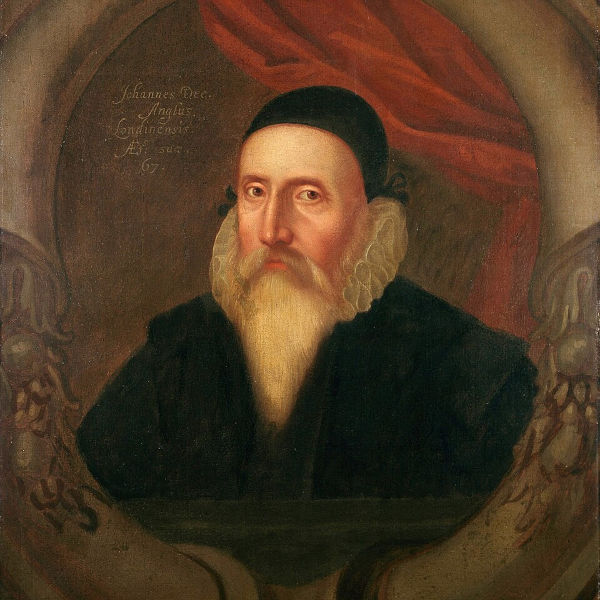
The structural blueprint for the occultist-spy was drawn in the Elizabethan era by Dr. John Dee (1527–1609). A brilliant mathematician, astronomer, cartographer, and advisor to Queen Elizabeth I, Dee embodied the fusion of esoteric knowledge and state intelligence. He cast horoscopes for the Queen, advised on matters of national strategy, and conducted private séances. Working with the medium Edward Kelley, Dee used a scrying mirror and crystal ball in attempts to communicate with angels. These sessions yielded the “Enochian language,” a complex system of “angelic” calls, symbols, and invocations still studied by occultists today.
Simultaneously, Dee operated as one of England’s most effective early intelligence agents. He traveled across Europe under the cover of scholarly and mystical pursuits, gathering geopolitical intelligence on Spain, the Holy Roman Empire, and other rivals. His secret dispatches to the Queen were famously signed with the code “007”—the two zeros representing her eyes, and the elongated seven symbolizing his role as her protected seer and servant. To Dee; the hidden knowledge of the occult and the hidden operations of statecraft were complementary arts.
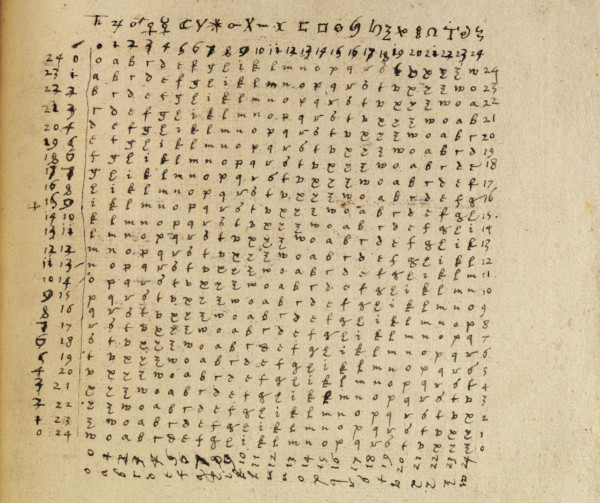
Dee established a lasting precedent. The infrastructure of occult secret societies; oaths of silence, cell-based or lodge structures, hierarchical degrees of initiation, symbolic codes and allegories, and selective membership mimics the architecture of a clandestine intelligence agency. Both worlds regulate information, though to different ends. For the spy, compartmentalization is a permanent shield against liability. For the occultist, it’s a veil, keeping secrets hidden only until the initiate climbs the degrees toward full illumination. Both demand absolute loyalty and discretion. They each traffic in deception, symbolism, and the manipulation of perception. The occultist’s rituals and ciphered grimoires parallel the spy’s codes, dead drops, and cover stories. As historian Richard B. Spence has noted, this shared ecosystem made esoteric circles a natural recruiting ground and operational cover for intelligence services.
By the early 20th century, as modern intelligence institutions such as Britain’s MI5 and MI6, and the Soviet Union’s OGPU, took shape amid rising global tensions, this parallel infrastructure proved invaluable. Occult communities offered built-in international networks of like-minded individuals who could move across borders under the guise of spiritual study. They provided a pre-existing culture of secrecy where members were already conditioned to not ask awkward questions. Furthermore, eccentric or bohemian behavior served as camouflage for covert activities, while the community held a philosophical tolerance for moral flexibility and the pursuit of hidden power.
Secret societies such as the Ordo Templi Orientis (OTO), various Rosicrucian orders, and Theosophical networks provided ready-made “legends” and support structures for operatives. What appeared to outsiders as bizarre mystical rituals could easily conceal message passing, asset recruitment, or influence operations. The shared ethos of operating beyond conventional morality made these circles particularly attractive. As one world dealt in “angelic hierarchies” and “demonic pacts,” the other dealt in cutouts, handlers, and deniable operations. The line between the two was often thinner than it appeared.
In an age of empire, revolution, and total war, both intelligence agencies and occult movements sought mastery over what they believed to be the unseen forces shaping human events, whether geopolitical or spiritual. In addition to providing cover, the occult offered a conceptual toolkit for understanding and manipulating the invisible: symbols, psychology, belief systems, and altered states of consciousness. Intelligence agencies, unbound by public ethics, recognized the practical utility of these tools.
The prototype established by John Dee would find its most infamous 20th-century expression in figures like Aleister Crowley, but the underlying principle remained consistent: in the realm of shadows, secrecy itself is infrastructure, and the occult has always provided one of the most durable and adaptable forms of that infrastructure.
Section 2: Cloak, Dagger, and Grimoire: The Clandestine Century
Prominent mystics with international lifestyles, pre-existing secretive networks, and flamboyant personas offered intelligence agencies near-ideal operational cover during the turbulent first half of the 20th century. Eccentric behavior masked tactical objectives, while oaths of silence and hierarchical structures mirrored intelligence tradecraft. This era transmuted the theoretical John Dee prototype into active, documented operations.
Aleister Crowley: The Double-Agent Enigma
No figure better embodies this intersection than Aleister Crowley, who lived from 1875 to 1947. The self-proclaimed “Great Beast 666” founded the spiritual philosophy of Thelema and led the Ordo Templi Orientis. Born into wealth, Crowley cultivated a deliberately provocative public image of decadence, sexual excess, and diabolical flair that earned him the British press label “the wickedest man in the world.” This notoriety, however, served as a remarkably effective operational screen.
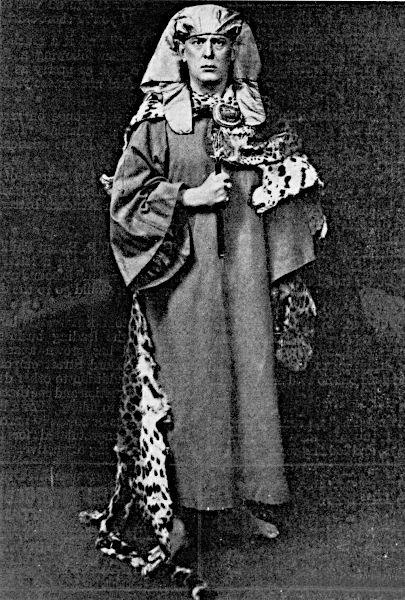
During World War I, Crowley relocated to the United States and embedded himself in New York’s radical publishing scene. He began writing for the pro-German newspaper The Fatherland before taking over as managing editor of its sister literary magazine, The International.. On the surface, this appeared treasonous.
Nowhere was this performance more dramatic than the dawn of July 3, 1915. Crowley chartered a small boat to Bedloe’s Island, took a position beneath the Statue of Liberty, and publicly declared the independence of an ‘Irish Republic’. In a grand gesture of defiance against the British Crown, he appeared to rip up his official British passport and toss the fragments into the New York harbor.
Declassified files from the U.S. Army’s Military Intelligence Division, however, indicate he was operating with the baseline cognizance of British authorities. Historian Richard B. Spence, in his book Secret Agent 666, presents evidence that Crowley’s activities were a deliberate ruse to infiltrate German espionage and sabotage networks in New York, while simultaneously working to gauge and sway American public opinion regarding entering the war on the Allied side.
Crowley’s intelligence-adjacent connections extended further. He dined with future James Bond creator Ian Fleming, who served in British Naval Intelligence during World War II. Fleming, along with spymaster Maxwell Knight (a model for “M” in the Bond novels), reportedly considered deploying Crowley to exploit Rudolf Hess’s well-known occult interests following Hess’s bizarre 1941 flight to Scotland. One rumored operation, sometimes referred to as “Project Mistletoe,” envisioned using Crowley in an interrogation or disinformation role. While the precise extent is a matter of debate, the documented social and professional overlaps are clear.
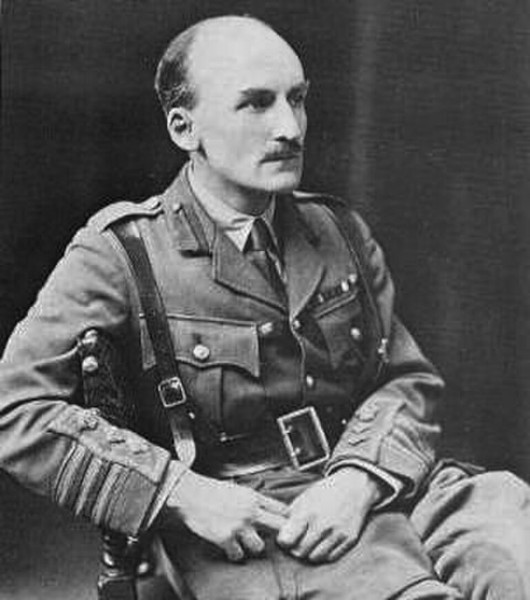
This proximity to state power was a recurring theme in Crowley’s life. Earlier in the century, he maintained a significant relationship with military theorist J.F.C. Fuller, the pioneering tank warfare strategist whose concepts later influenced modern mechanized warfare. He authored The Star in the West in 1907, which was a highly favorable critical study of Crowley’s poetry. Fuller joined Crowley’s A∴A∴ magical order and collaborated on editing The Equinox. Their intense friendship, rooted in shared interests in elitism and mysticism, ended acrimoniously around 1911 amid a public libel case that exposed Crowley’s bisexuality and threatened Fuller’s rising military career. Fuller later developed extreme fascist sympathies, demonstrating how Crowley’s esoteric networks consistently overlapped with radical geopolitical and military actors.
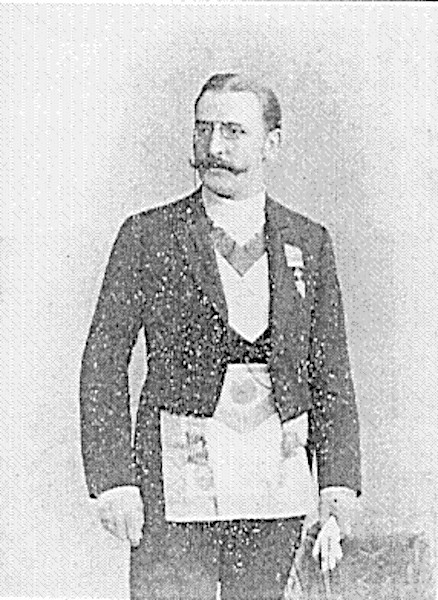
Crowley’s closer occult associates further wove this clandestine web. Theodore Reuss, a co-founder of the Ordo Templi Orientis, had documented ties to German intelligence as a political police agent. Everard Feilding, a prominent occultist and close Crowley colleague, worked directly for the British Navy’s Bureau of Commercial Intelligence. These overlapping circles provided intelligence services with a built-in ecosystem for double-agent activity, covert monitoring of extremist movements, and deniable political warfare.
Nicholas Roerich and the Great Game Mystics
The intersection of intelligence and esotericism wasn’t confined to Western Europe. It played a defining role in the “Great Game,” the long-standing geopolitical rivalry between the British and Russian Empires for dominance over Central Asia. Throughout the nineteenth and early twentieth centuries, this wilderness of mirrors relied heavily on explorers, surveyors, and spiritualists. Mystics were uniquely valuable to imperial spymasters. They could cross restricted borders, map strategic mountain passes, and infiltrate isolated communities under the guise of religious pilgrimage or scientific study without triggering an overt military provocation.
The Sacred Union Project
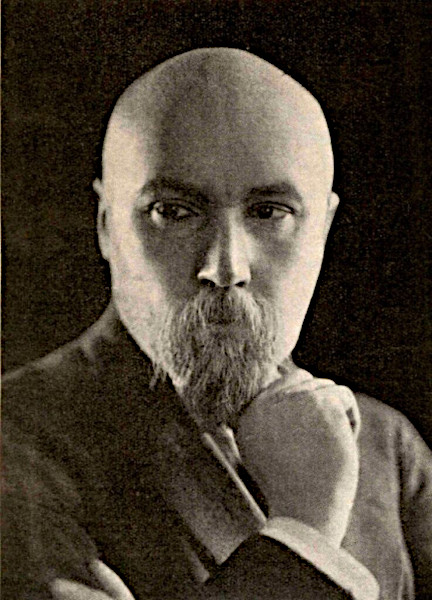
Russian painter and mystic Nicholas Roerich, alongside his wife Helena, epitomized this era of esoteric diplomacy. As the founders of Agni Yoga, the Roerichs claimed to receive channeled messages from Eastern Mahatmas. By the 1920s, they became consumed by a quest to locate Shambhala, the mythical Himalayan kingdom of spiritual purity. Their spiritual ambitions were grander than mere exploration. The Roerichs sought to establish the Sacred Union, a pan-Buddhist corporate state uniting parts of Siberia, Mongolia, and Tibet, with Roerich serving as its spiritual sovereign.
The Soviet Occult Bureau
This mystical crusade immediately caught the attention of international intelligence agencies. Inside the early Soviet Union, the OGPU secret police operated a highly classified, specialized cryptology and occult department led by Gleb Bokii. This bureau actively investigated telepathy, mind control, and ancient mysticism for state espionage. Bokii’s department collaborated with scientist-mystic Alexander Barchenko to track the Roerichs. The OGPU sought to weaponize the Shambhala prophecy for psychological warfare, attempting to convince Central Asian Buddhists that communist ideology aligned with their messianic traditions.
Concurrently, British Intelligence monitored Roerich’s massive 1920s Himalayan expeditions with intense suspicion. Operating from their station in British India, the British viewed Roerich as a high-threat Soviet agent using religious fervor to incite an anti-imperialist Buddhist revolt along their northern borders.
The 1934 Manchurian Debacle
In the 1930s, Roerich’s operations shifted to the American sphere of influence. He developed a deep spiritual mentorship with U.S. Secretary of Agriculture (and future Vice President) Henry Wallace, a fellow mystic who held significant sway within Franklin D. Roosevelt’s administration. In 1934, Wallace secured federal funding to send Roerich on an official U.S. government expedition to Manchuria, ostensibly to harvest drought-resistant grasses to combat the American Dust Bowl.
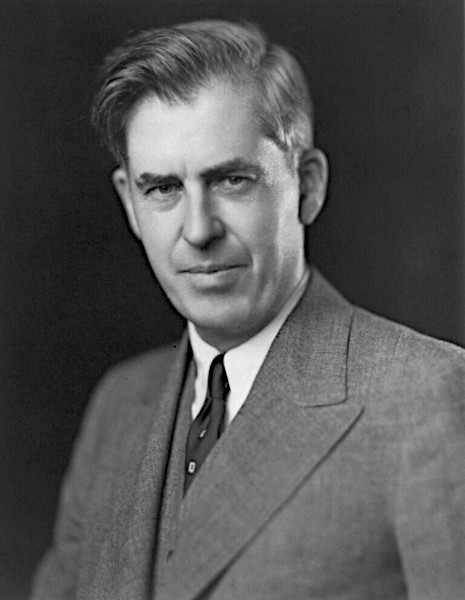
The expedition quickly triggered a severe international crisis. Once on the ground, Roerich largely ignored the agricultural mission. Instead, he purchased weapons, organized a private armed militia, and engaged in rogue geopolitical maneuvering with anti-Soviet White Russian émigrés. His aggressive behavior terrified neighboring governments, forcing a deeply embarrassed U.S. State Department to abruptly terminate his funding. The Roosevelt administration severed all ties with the artist and launched an aggressive tax evasion investigation against him. Roerich fled to India, never returning to the United States. His career demonstrated how a profound spiritual quest could serve as a highly volatile screen for international espionage and rogue statecraft.
Nazi Occult Interests and Allied Countermeasures
The rise of Nazi Germany intensified the mingling of espionage and the esoteric, though the regime’s relationship with the occult was deeply hypocritical. The Nazi party was incubated in the shadows of the Thule Society, a post-WWI occultist secret network whose members helped launch the political engine that became the NSDAP. Once in power, Adolf Hitler aggressively banned independent mystic groups, viewing them as dangerous clandestine liabilities.
However, the state monopolized the esoteric. Driven by Heinrich Himmler’s intense personal obsessions, factions within the SS institutionalized these myths. Through the Ahnenerbe institute, a highly funded SS think tank, the state financed global expeditions to hunt for lost relics, decipher ancient runes, and construct a pseudoscientific, neo-pagan mythology to legitimize imperial conquest
Dennis Wheatley and the War Cabinet
British establishment figures actively engaged in this unorthodox landscape from the other side. Occult author Dennis Wheatley became famous for writing espionage thrillers heavily infused with esoteric themes, but his insights were more than mere fiction. In 1941, he was formally commissioned into the Joint Planning Staff of the War Cabinet as a strategic planner. Wheatley spent the war writing highly classified papers on strategic deception and psychological warfare, utilizing his deep knowledge of the occult to help the government analyze and exploit the psychological vulnerabilities of the Nazi leadership..
The Magical Home Front
Beyond official government operations, the British home front witnessed independent, organized esoteric resistance. These civilian occultists viewed the war as a conflict occurring on both material and spiritual planes. Dion Fortune mobilized her Fraternity of the Inner Light to conduct synchronized weekly group visualization rituals designed to reinforce national defense.
Concurrently, the New Forest Coven, an early Wiccan group linked to Gerald Gardner, reportedly conducted a ritual known as Operation Cone of Power on Lammas Eve in 1940. This assembly aimed to direct psychic energy to prevent a German naval invasion. These rituals represent a unique psychological phenomenon of World War II.
Jack Parsons and the Bridge to Scientology
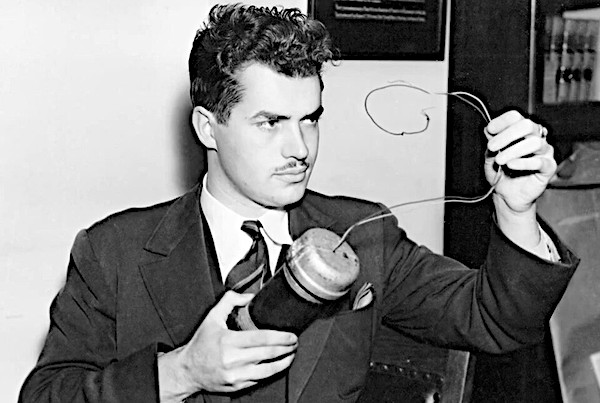
In America, Jack Parsons represented the direct fusion of avant-garde rocket science and Western esoteric practice. As a brilliant chemist who co-founded the Jet Propulsion Laboratory, Parsons simultaneously led the Agape Lodge of the Ordo Templi Orientis in California. He maintained a regular correspondence with Aleister Crowley. In 1946, Parsons conducted the Babalon Working, which was a series of intense Enochian rituals intended to incarnate a Thelemic deity and herald a new spiritual era.
Parsons’ primary partner in this operation was L. Ron Hubbard, a former naval officer and mediocre pulp fiction writer. Hubbard served as the official scribe and magical assistant during the desert invocations. The partnership collapsed when Hubbard absconded with Parsons’ life savings, totaling tens of thousands of dollars invested in a yacht venture named Allied Enterprises. Hubbard also left with Parsons’ girlfriend, Sara Northrup, whom Hubbard later married. Parsons felt deeply betrayed by the theft, responding with ritual curses against his former partner.
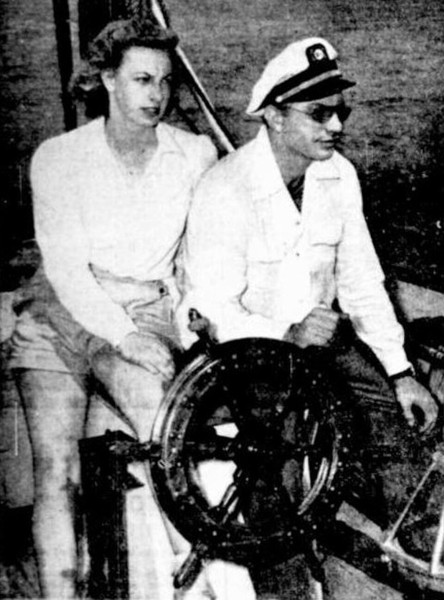
Crowley monitored these chaotic events through letters sent from Pasadena, offering a scathing assessment of the situation. He wrote, ‘I get fairly frantic when I contemplate the idiocy of these louts,’ viewing Hubbard as an ordinary con man exploiting a gullible disciple. Despite this documented contempt, Hubbard later claimed during a 1952 Scientology lecture that Crowley had been his very good friend. This was clearly a lie. The two men never personally met, and Crowley held Hubbard in absolute disdain.
This strange interlude serves as the generational bridge from Crowley’s fading vanguard to the dawn of a new American spiritual frontier. By 1950, Hubbard would pivot from pulp sci-fi and sex magick to publish Dianetics, laying the foundation for the Church of Scientology. The new movement absorbed the structural mechanics of Western esotericism, utilizing hierarchical degrees of initiation, strict internal secrecy, and the promise of hidden knowledge to achieve personal power. The resulting organization featured its own aggressive internal intelligence apparatus that rivaled state agencies in secrecy and ruthlessness. Ultimately, Hubbard’s inflated claims of covert naval intelligence work further blurred the lines between occult myth-making and theatrical espionage posturing.
Transition to Institutional Control
What began as individual occultists serving state intelligence networks evolved into a completely different operational paradigm. In Scientology’s case, it resulted in a private organization that built its own permanent internal intelligence apparatus, known as the Guardian’s Office. This entity eventually rivaled sovereign governments in secrecy, information gathering, and the targeted persecution of perceived enemies. It marked a new chapter in the occult-intelligence relationship, demonstrating the creation of self-contained systems of psychological and physical control operating entirely outside traditional state structures.
Section 3: Weaponizing Illusion – Deception, Counter-Intelligence, and Psychological Warfare
As the 20th century progressed, intelligence agencies moved beyond simply using occultists as individual assets and began systematically adopting their methods. Focus shifted from the occultist as cover to the occult as a psychological toolkit. Spymasters learned to exploit misdirection, symbolism, altered states, superstition, and belief manipulation for tactical and strategic advantage. This era marked the formal weaponization of the art of illusion.
Louis de Wohl: Astrological Disinformation
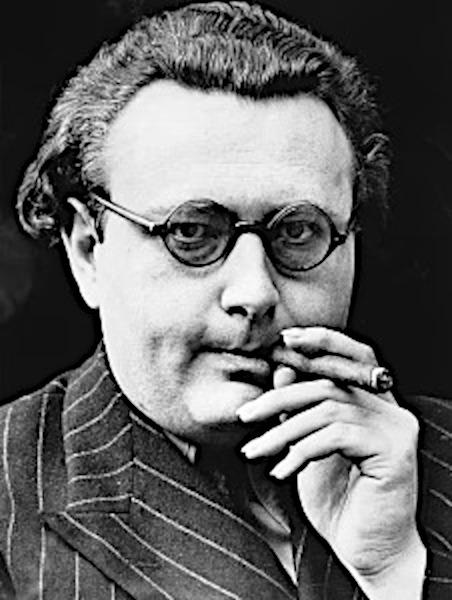
During World War II, the British Special Operations Executive and the Political Warfare Executive recognized the Nazi leadership’s profound vulnerability to occult influences. While Adolf Hitler remained personally skeptical of the practice, key figures such as Heinrich Himmler and Rudolf Hess routinely consulted seers. The British recruited German-born astrologer Louis de Wohl as a black propaganda asset. De Wohl’s primary mandate was to calculate the exact astrological advice that Hitler’s personal mystics were likely delivering to the Reich Chancellery, allowing British planners to anticipate German military timelines.
Simultaneously, de Wohl generated deliberately pessimistic and misleading astrological charts tailored to key Nazi figures. The Political Warfare Executive planted these forged predictions in counterfeit esoteric publications, smuggling them into Germany through neutral countries and specialized propaganda distribution channels. The operation aimed to induce operational hesitation, poor strategic choices, and deep internal doubt within the Nazi high command. De Wohl also gathered domestic intelligence from high-society clients who sought his private services in London. This initiative represented a highly sophisticated, low-cost psychological operation that directly weaponized esoteric belief systems against an enemy state.
John Mulholland and the Magician’s Contribution to MKUltra
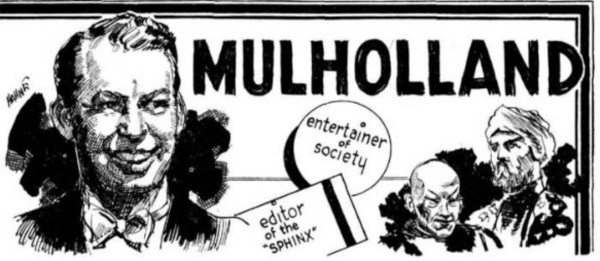
The CIA took this psychological weaponization even further during the Cold War. Recognizing that stage magicians and spiritualist mediums possessed deep practical knowledge of human cognitive vulnerabilities, the Agency hired John Mulholland, America’s leading magician and occult historian. In 1953, under the umbrella of Project MKUltra Subproject 4, Mulholland authored classified training manuals, including the notable Some Operational Applications of the Art of Deception.
These manuals translated the core principles of conjuring, which included misdirection, suggestion, sleight-of-hand, and psychological forcing, into practical espionage tradecraft. Operatives learned how to covertly spike drinks, plant listening devices, switch objects unnoticed, and manipulate targets using the same mental blind spots exploited by fraudulent mediums. Although CIA Director Richard Helms ordered the destruction of all MKUltra files in 1973, a single copy of Mulholland’s work survived the purge in a misfiled archive. Declassified decades later, Mulholland’s work demonstrated a clear transfer of esoteric-derived psychological techniques into state intelligence. The same mechanics used for centuries in ritual and séance were now formalized for covert operations.
Helen Duncan: When the Occult Became a Perceived National Security Threat
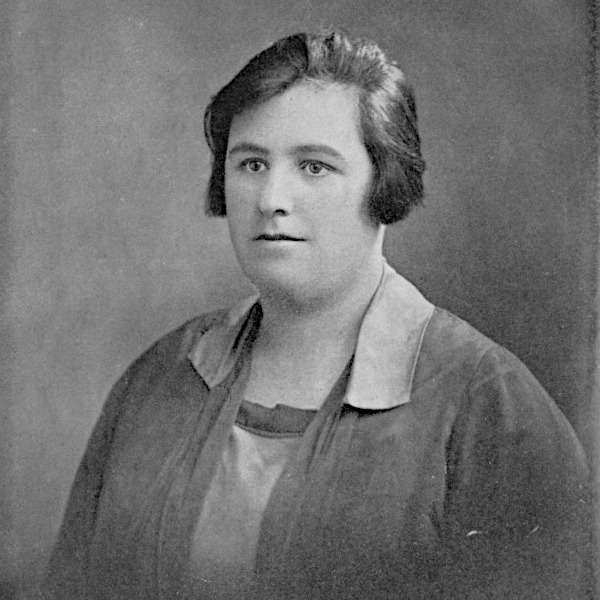
Not all intersections between statecraft and the esoteric were offensive operations. Sometimes the occult represented a profound defensive vulnerability. In late 1941, Scottish spiritualist medium Helen Duncan held a séance in Portsmouth, during which she allegedly materialized the spirit of a deceased sailor. The spirit reportedly revealed that his ship, the battleship HMS Barham, had just been sunk. The British War Office had strictly classified this disaster to preserve public morale and protect ongoing naval movements.
Surveillance and Intelligence Concerns
MI5 placed Duncan under strict surveillance. Clandestine officials feared either genuine psychic tracking or, far more plausibly, that her spiritualist network was acting as cover for a high-level naval intelligence leak. By 1944, with the highly sensitive D-Day landings approaching and military plans at risk, authorities raided her assembly and arrested her. She was prosecuted and convicted under the Witchcraft Act of 1735. Designed as an eighteenth-century weapon against superstition, the statute criminalized the fraudulent pretense of conjuring spirits. Duncan became the last person in Britain to be imprisoned under the act, serving a nine-month custodial sentence.
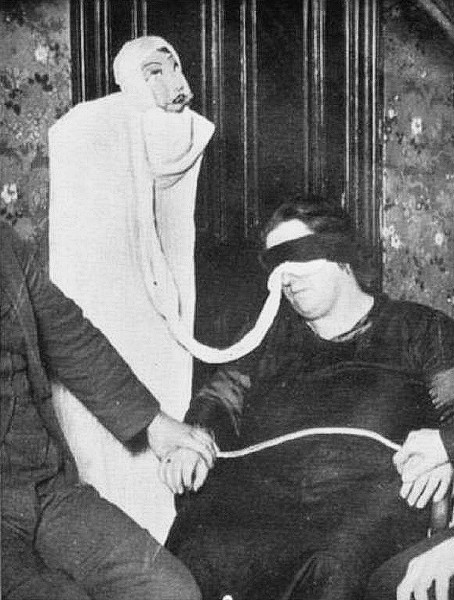
The case remains controversial. Critics view it as a gross judicial overreach and the outright persecution of mediumship. Conversely, intelligence historians see it as a ruthless but pragmatic move to protect classified information during total war. Duncan’s prosecution illustrates how seriously intelligence agencies treated the potential intersection of esoteric circles and real operational security.
Broader Context of WWII Psychological Operations
These specific historical examples existed within a wider, systemic pattern. Both Axis and Allied powers experimented extensively with symbolic warfare, planted rumors, and the deliberate exploitation of popular superstition. The Nazi elite’s fascination with occult symbolism, runic mysticism, and Holy Grail legends was consistently countered by targeted Allied disinformation campaigns designed to feed those exact obsessions.
Under the Political Warfare Executive, black propaganda specialists like Sefton Delmer broadcasted counterfeit radio reports packed with ominous astrological predictions. These operations aimed to amplify the existing superstitious anxieties of the German public as military conditions deteriorated. This occult-tinged propaganda and the ritualistic framing of the geopolitical conflict blurred the line between tactical information operations and esoteric practice.
By the end of World War II, the stage was set for even more ambitious intelligence initiatives. Clandestine agencies had proven the concrete, practical value of occult-derived methodologies for strategic deception and psychological influence. The Cold War took these wartime experiments to new extremes. The upcoming era shifted state focus away from isolated, ad-hoc operations, pivoting instead toward institutionalized, highly funded government programs exploring systematic mind control, psychic perception, and total psychological dominance.
Section 4: Cold War Paranormal Warfare, Mind Control, and Doctrinal Evolution
The Cold War transformed the occasional wartime deployment of occult methods into large-scale, institutionalized programs. Fearing that the Soviet Union was making dangerous breakthroughs in parapsychology and psychic espionage, the United States poured massive resources into exploring every possible unconventional edge. What began as opportunistic psychological operations evolved into systematic attempts to master the human mind. Perception, belief, and consciousness became formalized tools of national intelligence and strategic dominance.
The Psychic Arms Race and the Stargate Project
Soviet interest in psychic phenomena, rooted in earlier Eastern Bloc parapsychological research, prompted an aggressive American counter-response. The U.S. Army, the Defense Intelligence Agency, and the CIA managed a consecutive series of highly classified programs. These operations bore various codenames over two decades, including Gondola Wish, Grill Flame, Center Lane, Sun Streak, and ultimately Project Stargate. Operating primarily out of Fort Meade, Maryland, from the 1970s until its official termination in 1995, these efforts focused on remote viewing, which was defined as the claimed ability to psychically perceive distant or hidden targets using only geographic coordinates or vague descriptors.
Declassified CIA and DIA files document extensive experiments involving military personnel and civilian psychics, including Ingo Swann, Pat Price, and Joseph McMoneagle. Certain sessions, conducted under laboratory conditions at the Stanford Research Institute, reportedly produced strikingly detailed descriptions of Soviet submarine facilities and hidden nuclear installations.
However, a 1995 CIA-commissioned review by the American Institutes for Research brought a definitive end to the project. The evaluation concluded that while certain laboratory results showed statistical anomalies slightly beyond chance, the gathered information remained too vague and inconsistent for field operations. The program delivered no reliable, actionable operational intelligence, despite costing roughly twenty million dollars over its lifespan.
Journalist Jon Ronson’s book The Men Who Stare at Goats popularized many of these eccentric efforts. His research highlighted proposals for Jedi warrior monks, alternative non-lethal warfare concepts, and the bizarre experiments attempting psychokinesis by staring at goats to stop their hearts. Far from mere absurdity, these concepts were officially organized under the First Earth Battalion manual, created by Lieutenant Colonel Jim Channon. Tasked by the military to study the human potential movement, Channon converted New Age concepts into official, declassified programs exploring human performance, altered states, and unconventional military doctrine.
MKUltra: The CIA’s Dark Exploration of Mind Control
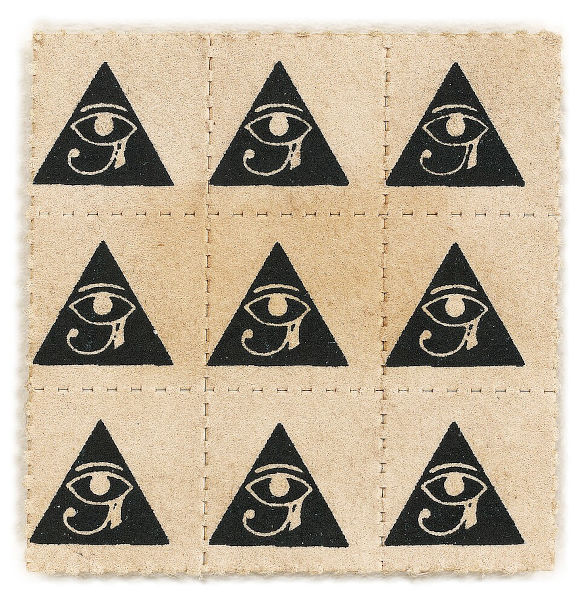
Beyond psychic research, the CIA’s notorious Project MKUltra operated from 1953 to 1973, following in the footsteps of its immediate predecessors, Project Bluebird and Project Artichoke. This vast umbrella program encompassed over 150 covert subprojects involving more than 80 institutions, including prominent universities, research hospitals, and federal prisons. Driven by intense Cold War panic over communist brainwashing techniques, the Agency aggressively sought reliable methods for interrogation, permanent memory erasure, personality reprogramming, and the creation of completely controllable assets.
Methods and Human Experimentation
Operational methods included the covert administration of LSD and other powerful hallucinogens on unwitting American and Canadian citizens. Researchers also utilized hypnosis, sensory deprivation, extreme isolation, electroshock therapy, and severe verbal and physical abuse. Canadian psychiatrist Donald Ewen Cameron’s psychic driving experiments at the Allan Memorial Institute in Montreal were among the most horrific. Funded covertly by the CIA through a front organization called the Society for the Investigation of Human Ecology, Cameron placed patients into drug-induced comas for weeks at a time. He then subjected them to repetitive audio loops designed to systematically depattern their personalities before attempting to rebuild them according to military specifications.
Most official MKUltra records were deliberately destroyed in 1973 on direct orders from CIA Director Richard Helms. Surviving documents, exposed through Freedom of Information Act requests and the 1977 Church Committee hearings, revealed breathtaking ethical violations and a total lack of civilian oversight. Project MKUltra stands as a stark example of intelligence agencies adopting and industrializing techniques long associated with occult practices. Altered states, hypnotic suggestion, psychological dissociation, and belief manipulation were weaponized to purely coercive ends.
Scientology Parallels: Private Mind Control
These state-sponsored programs found unsettling operational echoes in the emerging Church of Scientology. L. Ron Hubbard’s auditing process utilizes an E-meter device adapted from earlier chiropractic designs to serve as a specialized psychological testing tool. This process, coupled with endless internal security checks and the systematic identification and removal of traumatic mental imprints known as engrams, mirrors elements of the depatterning and reprogramming explored in MKUltra.
The group’s hierarchical training ladder, strict isolation policies, and the Rehabilitation Project Force, which functions as a punitive forced-labor and retraining program, represent highly sophisticated mechanisms of psychological and physical control. Critics argue that Scientology weaponized occult-derived ideas of mental clearing and focused will into a closed system of influence. This structure exerts near-total authority over its members’ thoughts, personal finances, and familial relationships, operating much like a privatized psychological operations command.
Michael Aquino, Temple of Set, and MindWar Doctrine
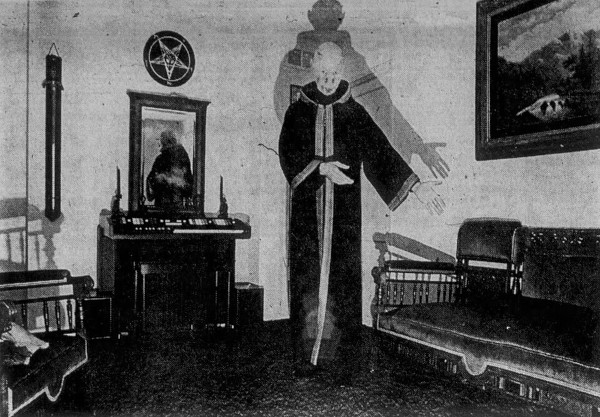
One of the most direct personal overlaps between military intelligence and the occult emerged in the figure of Lieutenant Colonel Michael Aquino. A decorated U.S. Army psychological operations specialist with extensive counter-intelligence experience, Aquino founded the Temple of Set in 1975 after splitting from Anton LaVey’s Church of Satan. The Temple emphasized the ancient Egyptian deity Set as a literal metaphysical entity, promoting a philosophy of conscious self-deification and psychological evolution through its own initiatory structure.
In 1980, Aquino co-authored an influential but unofficial discussion paper titled From PSYOP to MindWar: The Psychology of Victory alongside Colonel Paul E. Vallely, who later retired as a Major General. The document advocated moving far beyond traditional tactical propaganda to achieve total psychological dominance over foreign and domestic populations. The core concepts of the MindWar doctrine focused on winning conflicts by thoroughly convincing all participants that enemy resistance was entirely futile.
The paper argued for seizing complete control of the global information environment, including media, education, and culture, to engineer baseline attitudes and beliefs. Furthermore, the authors advocated exploring advanced technological means, such as electromagnetic frequencies, to directly influence human cognition, weaken deeply held moral convictions, and alter behavior at scale.

MindWar framed psychological operations as the decisive, permanent battlefield of the future, fought primarily in the realm of human perception and consciousness.
From State Programs to Private Systems
By the late Cold War, the occult-intelligence nexus had evolved in two distinct directions. Sovereign governments experimented heavily with psychic perception and chemical reprogramming through institutionalized programs like Project Stargate and Project MKUltra. Simultaneously, private movements descending directly from the Crowley and Parsons lineage, particularly Scientology, built vast corporate empires using similar principles of mental control, hierarchical secrecy, and aggressive counter-intelligence defense against external scrutiny. The stage was set for the occult not merely to serve state intelligence, but to become a parallel, weaponized power structure in its own right.
Section 5: The Occult as Institutional Power and Internal Vulnerability
While sovereign governments historically weaponized occult-derived methods against external enemies, the late twentieth century revealed a more disturbing development. The occult could compromise state power from within, evolving into self-sustaining institutional systems that rivaled national intelligence agencies in secrecy, counter-espionage control, and ruthlessness.
Scientology’s Guardian’s Office and Operation Snow White
The most striking modern example of this evolution is the Church of Scientology’s own internal intelligence apparatus. In 1966, L. Ron Hubbard established the Guardian’s Office to protect and advance the global interests of his organization. Headed operationally by his third wife, Mary Sue Hubbard, the Guardian’s Office functioned as a full-fledged private secret service, utilizing surveillance, systemic infiltration, blackmail, and covert dirty tricks against perceived political enemies.
The absolute apex of its clandestine activities was Operation Snow White, launched during the 1970s. This massive criminal conspiracy aimed to systematically purge all unfavorable law enforcement and tax records regarding Scientology and Hubbard from state files. Under this program, specialized covert assets infiltrated 136 government agencies, foreign embassies, and private critical organizations across more than 30 countries. Operatives conducted physical burglaries, wiretapped federal offices, planted disinformation, and photocopied tens of thousands of classified documents. At its height, the operation deployed up to 5,000 covert agents, making it the single largest domestic espionage infiltration of the United States government in American history.
The complex scheme unraveled in 1977 following simultaneous, massive FBI raids on the organization’s headquarters. Eleven high-ranking executives, including Mary Sue Hubbard, were prosecuted and convicted in federal court for conspiracy, burglary, and obstruction of justice. Federal prosecutors officially named L. Ron Hubbard as an unindicted co-conspirator, forcing the founder into permanent physical seclusion for the rest of his life.
From Intelligence Apparatus to Behavioral Control System
The Guardian’s Office was eventually disbanded and restructured into the modern Office of Special Affairs, which continues to manage the organization’s legal defense and external investigations. The entire historical episode exposed a private entity’s willingness to deploy occult-rooted psychological control techniques, such as absolute hierarchical obedience, strategic deception, and total institutional loyalty, on a geopolitical scale.
This institutional transformation reveals how the legacy of mid-century esotericism shifted into corporate statecraft. What began as Crowley-inspired rituals conducted alongside Jack Parsons in Pasadena metastasized into a private international empire that managed its own aggressive intelligence service. The organization’s methods of internal auditing, continuous security checks, disconnection policies, and the punitive labor of the Rehabilitation Project Force demonstrate a highly refined system of behavioral manipulation. These protocols directly echo, and in some ways surpass, the coercive psychological restructuring explored by the CIA during Project MKUltra. Hubbard’s extensive fabrications, including his exaggerated naval intelligence credentials and his fictitious close friendship with Crowley, underscore the deceptive roots of an enterprise that now maintains global tax-exempt status behind an ironclad wall of absolute secrecy.
The Reagan White House: Astrology at the Highest Levels

Even the absolute pinnacle of democratic power wasn’t immune to esoteric penetration. Following the 1981 assassination attempt on President Ronald Reagan, First Lady Nancy Reagan secretly retained San Francisco astrologer Joan Quigley on a monthly retainer. For seven years, Quigley dictated the precise timings for Air Force One flights, presidential speeches, press conferences, and major diplomatic events based entirely on celestial alignments.
According to former White House Chief of Staff Donald Regan, virtually every major movement and logistical decision during his tenure was cleared in advance with Quigley. The Executive branch managed the President’s itinerary using a specialized, color-coded calendar reflecting her astrological forecasts, which marked days as favorable or hazardous. This system dictated the scheduling of the historic 1985 Geneva Summit with Soviet leader Mikhail Gorbachev. Quigley studied both leaders’ astrological charts, subsequently advising the First Lady that their celestial compatibility favored improved relations. This private astrological counsel directly encouraged a systemic softening of Reagan’s aggressive public rhetoric regarding the Soviet Union. An unelected mystic effectively held operational veto power over the schedule of a branch of the U.S. government.
From a counter-intelligence perspective, this dependency created a strategic vulnerability. Had the Soviet KGB or any other hostile intelligence service successfully wiretapped Quigley’s communications or mapped her specific predictive methodologies, they would have unlocked a flawless pattern-recognition asset. Foreign adversaries could have forecast the President’s movements, public appearances, and critical decision-making windows with fair precision.
The Danger of Internal Compromise
These case studies expose a critical shift: the esoteric moved from being an external operational mask to a backdoor into state power. By injecting mystic practices into the highest levels of governance, these networks birthed shadow hierarchies that operated entirely outside traditional oversight. Their fusion leaves us with a haunting reality, forcing urgent questions about democratic transparency, psychological subversion, and who is truly steering national security.
Section 6: The Permanent Shadow – Shared Amoral Philosophy, Ethics, and Modern Echoes
The relationship between government intelligence and the occult is defined by a deep, enduring philosophical alignment that transcends any specific era, technology, or personality. At its core lies a shared rejection of conventional morality in pursuit of power and control.
Aleister Crowley’s central dictum, stating that doing what thou wilt shall be the whole of the Law, finds its practical counterpart in the intelligence world’s operational doctrine that the end justifies the means. Both traditions operate on the premise that ordinary ethical constraints are illusions for the masses. Conversely, the initiated or the authorized few are free, and even obligated, to manipulate symbols, beliefs, perceptions, and people to achieve desired outcomes. Whether through ritual invocation or psychological operations, their goals are the same. Spymasters and mystics seek total mastery of the intangible forces that shape visible reality.
This amoral framework explains why the intersection has proven so durable. Intelligence agencies have never primarily been interested in particular occult beliefs. Instead, they’re interested in occult tools, specifically secrecy infrastructure, psychological manipulation, narrative control, and the exploitation of human vulnerability to the unknown. The occult provides a rich reservoir of techniques for altering consciousness, manufacturing consent, and creating plausible deniability.
Broader Historical Threads
The pattern extends far beyond Crowley’s occult lineage. Soviet intelligence showed keen interest in parapsychology, monitoring and sometimes exploiting mystical figures. Helena Blavatsky, the co-founder of Theosophy, faced accusations of serving as a Tsarist intelligence asset in India. Furthermore, Freemasonic and Rosicrucian networks have historically intersected with revolutionary movements, early American and European intelligence structures, and elite power circles. These groups offered another layer of secretive, hierarchical influence that proved highly useful to state actors.
Modern Echoes: The Digital Occult
Today, the operational theater has shifted from scrying mirrors to data. Modern psychological operations increasingly resemble digital sorcery. Predictive modeling functions as algorithmic divination, while micro-targeted propaganda operates as personalized spellcraft. Mass-scale social engineering serves as collective reality-shaping. Intelligence agencies and private actors now weaponize behavioral psychology, addiction-by-design platforms, and artificial intelligence narrative control at a scale the architects of MKUltra could scarcely imagine.
In this environment, movements like Scientology represent a particularly successful hybridization. This private organization absorbed occult psychological techniques, built its own permanent internal intelligence service, and now wields significant financial and cultural power while maintaining extreme secrecy. It stands as a warning of what can emerge when esoteric-derived mind control methods escape state oversight and become institutionalized in the private sector.
Ethical Implications
The permanent shadow cast by this relationship raises serious concerns. When intelligence agencies embrace the occult’s baseline amorality, they risk eroding the very ethical foundations that justify their existence in democratic societies. The weaponization of belief treats human consciousness as raw material to be shaped rather than respected.
This dynamic creates recurring domestic vulnerabilities. Internal reliance on esoteric advisors, as seen in the Reagan White House, opens severe counter-intelligence risks. External movements that adopt similar control techniques can grow into powerful, unaccountable entities that challenge state authority while mimicking its methods. The line between protector and manipulator, or between defense and domination, becomes dangerously thin.
Ultimately, the intelligence community’s long flirtation with the occult reveals a fundamental truth. The most effective deceptions are those that operate outside the visible realm. Whether through Renaissance scrying, psychic spying, or today’s data-driven influence operations, control is achieved through the total mastery of what others can’t perceive.
Conclusion
The long and tangled relationship between government intelligence agencies and the occult isn’t a footnote in history but a recurring feature of how power operates in the shadows. From Dr. Dee to MKUltra, the pattern is traceable. Intelligence services have repeatedly turned to esoteric traditions for operational cover, psychological tools, influence operations, and conceptual frameworks that transcend conventional social boundaries.
This nexus thrives because both worlds share the same fundamental operating system. Both rely on secrecy, hierarchical control, symbolic manipulation, and the calculated exploitation of human belief. In both domains, conventional ethics are viewed as limitations to be transcended by those with the will and the security clearance to do so.
Don’t let the conversation stop here. Join us at Blue Sky – @thebohemianstar.com. If you’re still lingering in the old spaces, you can also join our private inner circle over at The Bohemian Star Salon on Facebook to share thoughts on music, culture and the weird side of history.
Bibliography
Aquino, Michael A., and Paul E. Vallely. From PSYOP to MindWar: The Psychology of Victory. Discussion Paper. Washington, DC: U.S. Army, 1980. [1]
Central Intelligence Agency. Project MKULTRA, the CIA’s Program of Research in Behavioral Modification. Joint Hearing before the Select Committee on Intelligence and the Subcommittee on Health and Scientific Research of the Committee on Human Resources, United States Senate, 95th Cong., 1st sess., August 3, 1977. Washington, DC: Government Printing Office, 1977. (Church Committee-related documentation.)
Crowley, Aleister. Magick Without Tears. Edited by Karl J. Germer. Hampton, NJ: Thelema Publishing Company, 1954.
Fuller, J. F. C. The Star in the West: A Critical Essay on the Works of Aleister Crowley. London: Walter Scott Publishing Co., 1007.
Hubbard, L. Ron. Dianetics: The Modern Science of Mental Health. New York: Hermitage House, 1950.
Hubbard, L. Ron. “The Philadelphia Doctorate Course Lectures.” Audio lecture series. Philadelphia, PA, December 1952.
Mulholland, John. Some Operational Applications of the Art of Deception. MKUltra Subproject 4, Technical Services Division. Washington, DC: Central Intelligence Agency, 1953. Declassified 2007. Reprinted in The Official CIA Manual of Trickery and Deception. New York: William Morrow, 2009.
Mumford, David, et al. An Evaluation of Remote Viewing: Research and Applications. Prepared for the American Institutes for Research (AIR) under contract to the Central Intelligence Agency. Washington, DC: American Institutes for Research, 1995. https://www.cia.gov/readingroom/docs/CIA-RDP96-00791R000200180006-4.pdf (Stargate Program review).
Quigley, Joan. What Does Joan Say? My Seven Years as White House Astrologer to Nancy and Ronald Reagan. New York: Birch Lane Press, 1990.
Regan, Donald T. For the Record: From Wall Street to Washington. San Francisco, CA: Harcourt Brace Jovanovich, 1988.
Reagan, Nancy. My Turn: The Memoirs of Nancy Reagan. New York: Random House, 1989.
Ronson, Jon. The Men Who Stare at Goats. New York: Simon and Schuster, 2004. [1]
Spence, Richard B. “Secret Agent 666: Aleister Crowley and British Intelligence in America, 1914–1918.” International Journal of Intelligence and CounterIntelligence 13, no. 3 (2000): 359–371. [1]
Spence, Richard B. Secret Agent 666: Aleister Crowley, British Intelligence and the Occult. Port Townsend, WA: Feral House, 2008. [1]
U.S. Central Intelligence Agency. An Evaluation of Remote Viewing: Research and Operational Applications. Prepared by the American Institutes for Research. Washington, DC: Central Intelligence Agency, September 1995.
U.S. Congress. Senate. Project MKUltra, the CIA’s Program of Research in Behavioral Modification: Joint Hearing before the Select Committee on Intelligence and the Subcommittee on Health and Scientific Research of the Committee on Human Resources. 95th Cong., 1st sess., August 3, 1977. Washington, DC: Government Printing Office, 1977. [1]
United Kingdom. The National Archives. Kew. Supplementary Files: Prosecution of Helen Duncan under the Witchcraft Act 1735. CRIM 1/1594, 1944.
Additional Recommended Sources
Crowley, Aleister. Magick Without Tears. Edited by Israel Regardie. Phoenix, AZ: Falcon Press, 1982. (Contains Crowley’s own observations on parallels between occult hierarchies and intelligence structures.)
Ronson, Jon. The Men Who Stare at Goats. New York: Simon & Schuster, 2004. (Popular account of First Earth Battalion and related unconventional warfare experiments.)
Note on Sources
Declassified CIA and DIA documents on Stargate, MKUltra, and related programs are available via the CIA Reading Room (cia.gov/readingroom). Many primary intelligence files on Crowley remain partially or fully sealed. Where claims rely on secondary interpretation (e.g., extent of Crowley’s operations or specific psyops), they are noted as such in the text. This bibliography prioritizes the most directly relevant and citable works used in the article’s development.
Discover more from The Bohemian Star
Subscribe to get the latest posts sent to your email.