
The Language of Power
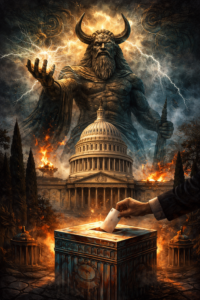
Christianity loves crowns. Its prayers shimmer with hierarchy: kingdom, lord, throne, dominion, obedience. This is the grammar of empire. It is Caesar’s lexicon dressed in sanctity. It carries the imprint of marble halls, soldiers’ boots, and incense masking the odor of power. Yet the teachings of Yeshua, a Galilean preacher of another kind of kingdom, turned that language inside out.
Before crowns and cathedrals, there were circles, fireside councils where decisions arose through listening and shared consent. Into that older memory, a young Galilean preacher dropped a spark.
Yeshua’s Counter-Grammar
The man we call “Jesus” — Yeshua, an itinerant teacher from a rural province, spoke in the only idiom of authority his world recognized. “Kingdom” was the common metaphor of the age. Yet he subverted it and loaded monarchy’s language with moral explosives.
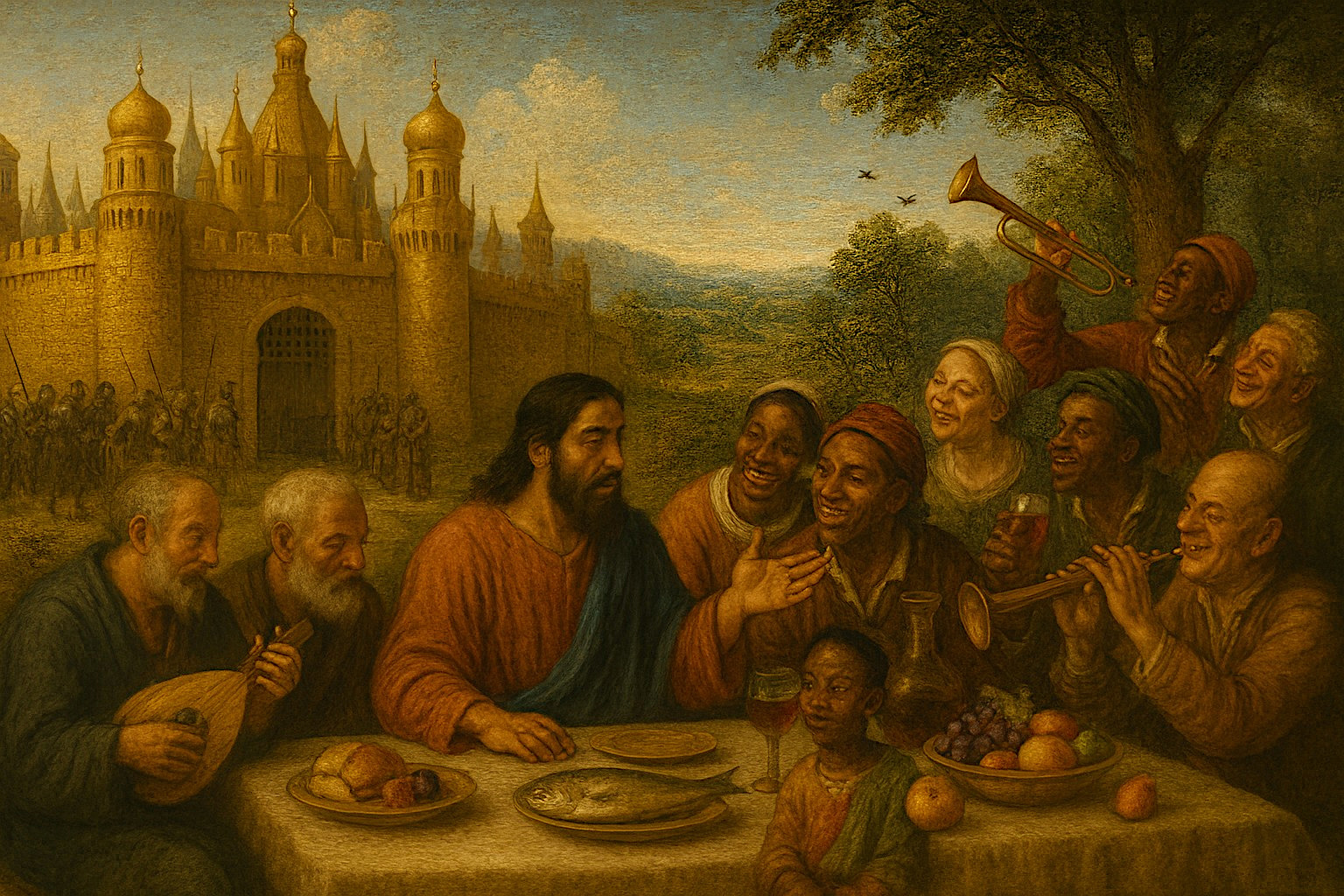
In Yeshua’s vision, the powerful step aside so the powerless can breathe. The first become last, the last become first. The rich are barred, the poor are blessed. The sick, the criminal, the outcast all find seats at the table. His “kingdom” refused every pattern of domination as an anti-kingdom lampooning every throne that mistook power for virtue.
To say “kingdom of God” in that world was a subversive act. It meant the sacred sitting down beside the broken, the hungry, and the ignored. It meant heaven setting the dinner table.
And yet, with history’s usual sense of irony, the religion that followed turned the rebel into royalty. The man who called his followers friends was recast as King of Kings and Lord of Lords, titles he never sought, drawn from the very vocabulary he sought to subvert.
Even the Romans had mocked the idea. When they crucified him, they nailed a placard above his head: Iesus Nazarenus Rex Iudaeorum, “Jesus of Nazareth, King of the Jews.” What began as a sneer at a failed insurgent later became a banner for a global church. The butt of the empire’s joke became its creed.
The Radical Table
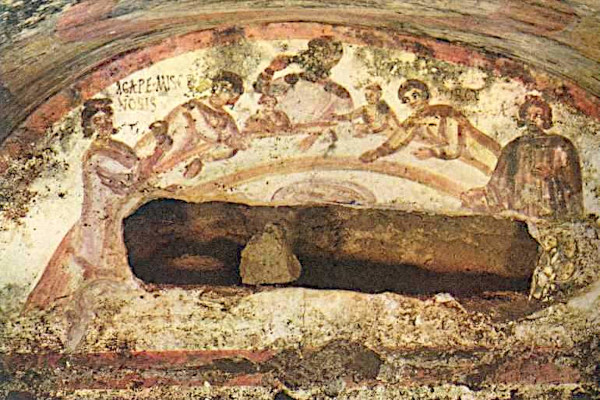
The earliest gatherings of his followers, the ekklesia, a word that once meant the civic assembly of Athenian citizens, bore little resemblance to imperial sanctuaries. They met in homes, breaking bread as equals: Jew and Greek, slave and free, woman and man; the boundaries of the ancient world dissolved around a shared meal.
In Greece, the very land where democracy had been born, this was a profound irony. The early Christian table mirrored the Athenian ekklesia, the assembly of equals. Yet as the movement spread, it drifted from that heritage. The democratic impulse was soon eclipsed by imperial ritual.
Yeshua and Democracy Before Kings
Anthropologists such as David Graeber and Christopher Boehm have argued that egalitarian decision-making predates monarchy by tens of millennia. Long before pharaohs and Caesars, human communities governed by counsel and consent. Hierarchy came later, built on surplus grain and stored wealth.
In that sense, Yeshua’s “kingdom” recalled humanity’s oldest politics: the circle around the fire, the shared meal, the symposium where every voice could be heard.
The Imperial Turn
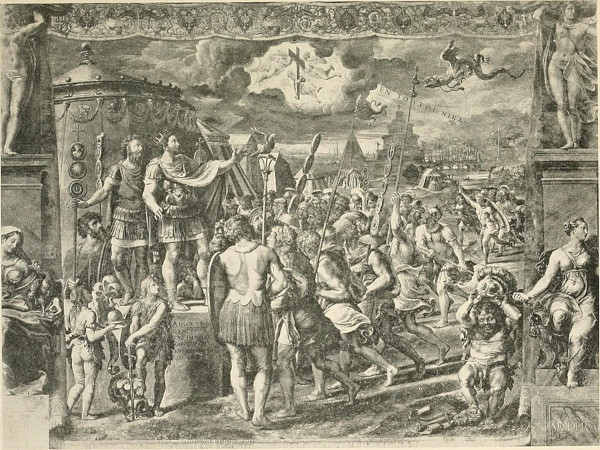
Then came Constantine. The Roman Empire, faltering under its own weight, found in the cross a new banner of legitimacy. In return, Christianity found a throne. The faith of the persecuted became the theology of the powerful. Bishops donned the vestments of senators, and the rhetoric of servitude was renamed “piety.”
The poor were told to wait for heaven. The prisoner was forgotten. The crippled were hidden. Kings were “anointed.” Heretics were burned. The language remained: kingdom, lord, dominion, obedience, but the meaning flipped. Yeshua’s revolt became Rome’s revenge.
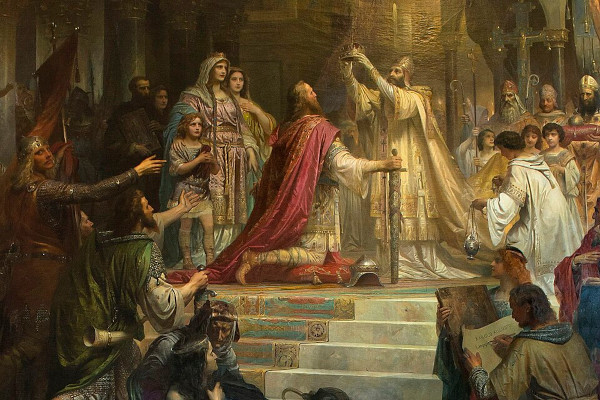
The imperial machinery set in motion by Constantine laid the theological foundations for centuries of European history, culminating in moments like the coronation of Charlemagne, where secular empires were entirely legitimized by church authority.
The Empire Never Ended
Science-fiction mystic Philip K. Dick once wrote, “The Empire never ended.” It endures, not in marble but in mind. Each “Thy Kingdom come” whispered in liturgy still carries a faint echo of Caesar. Each “Lord have mercy” bows, however unconsciously, to hierarchy.
William Blake saw it clearly:
“This vision of Christ that thou dost see / Is my vision’s greatest enemy.”
There are two Christs, or perhaps none, depending on how one reads the story. One enthroned beside emperors, blessing dominion; the other overturning tables, embracing outcasts, and dancing at a wedding. One rules. The other liberates.
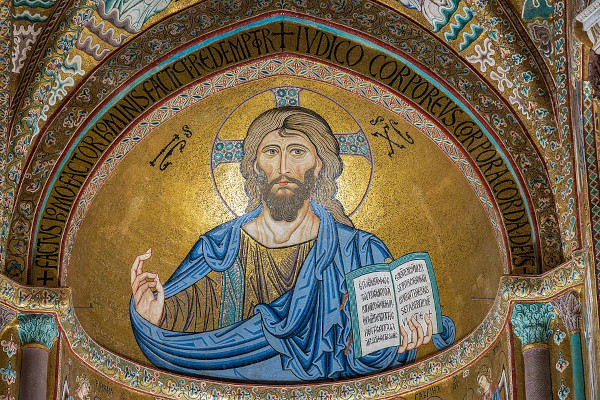
Whether Christ was a man, a myth, or a metaphor, the contrast endures between the will to dominate and the will to serve. The empire never ended, but neither did the ancient memory: the circle of equals, the shared meal, the shared story.
The question is less about belief than about allegiance. The question still echoes: which vision do we serve: the crowned or the compassionate?
Don’t let the conversation stop here. Join us at Blue Sky – @thebohemianstar.com. If you’re still lingering in the old spaces, you can also join our private inner circle over at The Bohemian Star Salon on Facebook to share thoughts on music, culture and the weird side of history.
Discover more from The Bohemian Star
Subscribe to get the latest posts sent to your email.