


The Soul Across Time
For millennia, humans have sought to define the soul, but in every culture, the definition has shifted, revealing as much about our fears and desires as about the essence of being. Ancient Egyptians conceived of multiple souls within a single person: ba, ka, and akh among them, each performing distinct roles in life and the afterlife. Hinduism presents the ātman, a spark of ultimate reality within, while Buddhism interrogates the very notion of a persistent self, emphasizing impermanence and flux. Judaism, Christianity, and Islam each articulate the soul differently: as relational, ethical, or immortal, yet often tied to notions of ego, morality, and reward beyond death. Across these traditions, the soul is alternately substance, essence, and guiding principle, yet rarely considered as motion or pattern in itself.
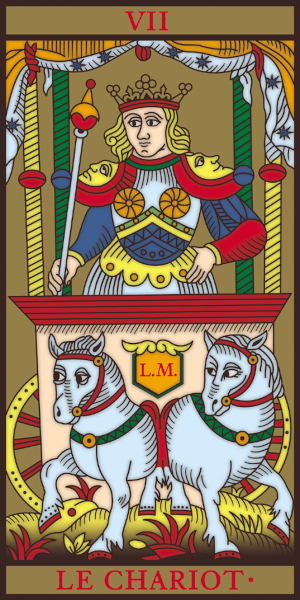
Thelema reframes this long history through the context of True Will. It integrates and renews earlier insights, presenting the soul as a dynamic trajectory, a recurring configuration of pattern, Will, and motion manifesting through body, mind, and culture. The soul emerges as a living current of consciousness expressing itself through time, circumstance, and relation, its continuity defined by the ongoing articulation of its pattern through the assimilation of experience. In this reframing, the soul is less a thing than a trajectory: an energetic and informational current expressing itself in time, circumstance, and with relation to other forces. Its persistence is structural rather than moral or sentimental, defined by the ongoing articulation of its pattern in relation to the evolving field of experience.
This perspective finds support across multiple fields. Crowley’s Thelemic writings, particularly The Book of Lies, explore the ego as friction within consciousness, dissolved in the ecstatic alignment of the Chariot. Maya Deren’s observations of Haitian Vodou possession demonstrate how the essential pattern of the individual is most fully expressed when the ego recedes. Process philosophy offers a conceptual framework for understanding selfhood as relational and emergent, while modern cognitive science illuminates the mechanisms through which patterns of thought and behavior arise and persist. Together, these sources allow us to view the soul as motion, tendency, and recurring configuration, the principle of Charioting: the alignment of body, mind, and pattern, the vehicle of life carrying the rider of Will, fully alive and fully in motion.
Steeped Horsehair: The Materiality of the Soul
I. The Chariot
Crowley’s Chapter VIII of The Book of Lies, Steeped Horsehair, opens with:
“Mind is a disease of semen.
All that a man is or may be is hidden therein.
Bodily functions are parts of the machine; silent, unless in dis-ease.
But mind, never at ease, creaketh ‘I’.
This I persisteth not, posteth not through generations, changeth momently, finally is dead.
Therefore is man only himself when lost to himself in The Charioting.”
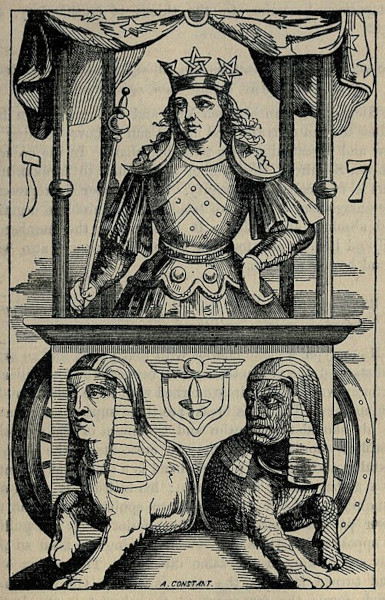
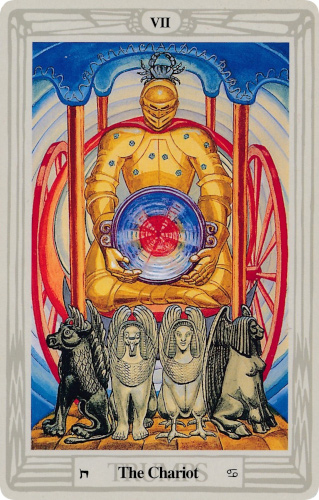
The title itself conveys a dual metaphor. Horsehair, historically used in saddles and upholstery, is soaked, stretched, and bound to create a functional surface. The Chariot in the Tarot is drawn by horses; “steeped horsehair” signifies the materiality of the vehicle in which consciousness rides. What is often imagined as metaphysical elevation, the “chariot of the soul,” is inseparable from the body’s matter, effort, and motion. The Chariot is not ethereal; it is built from animal hair, sweat, and strain, the physical substrate of life.
II. Mind as a Disease of Semen
Crowley’s aphorism, “Mind is a disease of semen,” frames consciousness as emerging from the generative medium. Semen encodes continuity; mind arises as a self-referential perturbation of life’s reproductive imperative. This phrasing is intentionally paradoxical, encoding mystical or esoteric dimensions beyond biology.
Process philosophy frames this as a self-referential disturbance in the flow of life-energy. Reflection introduces tension, a “dis-ease,” in the otherwise seamless motion of existence. The mind’s assertion of I is analogous to a joint creaking under strain: the friction of self-awareness within the body-mind system.
III. Hidden Potential
“All that a man is or may be is hidden therein.” The generative essence contains encoded potential: genetic, behavioral, and archetypal. In metaphysical terms, it represents a latent program of becoming. Alfred North Whitehead, the process philosopher who saw reality as a web of unfolding events rather than static substances, described each moment as shaped by the traces it inherits from the past. His concept of “prehension” names this act of taking up and transforming inherited potentials. Within Thelema, the generative essence corresponds to True Will as a dynamic vector that unfolds across time, expressing the individual’s emergent pattern. The “soul,” therefore, is not an immaterial spark, but a recursively self-defining pattern of energy and information.
IV. Bodily Functions and the Mechanical Body
“Bodily functions are parts of the machine; silent, unless in dis-ease.” A healthy body operates without conscious attention; its processes announce themselves only when disrupted. The mind’s incessant self-reference similarly signals imbalance. In functional terms, the “soul” manifests through the harmonious operation of the body-mind system. Consciousness emerges from the alignment of parts rather than existing as an object separate from them.
V. The Creaking “I”
“But mind, never at ease, creaketh ‘I’.” The ego is the frictional noise of self-reference: consciousness perceives itself as separate, producing the illusion of an enduring observer. Modern cognitive models, which view consciousness as an emergent narrative, offer a parallel perspective on Crowley’s “creaking I.” In his symbolism, the creak represents unbalanced motion: awareness separated from the flow of Will.
VI. The Charioting
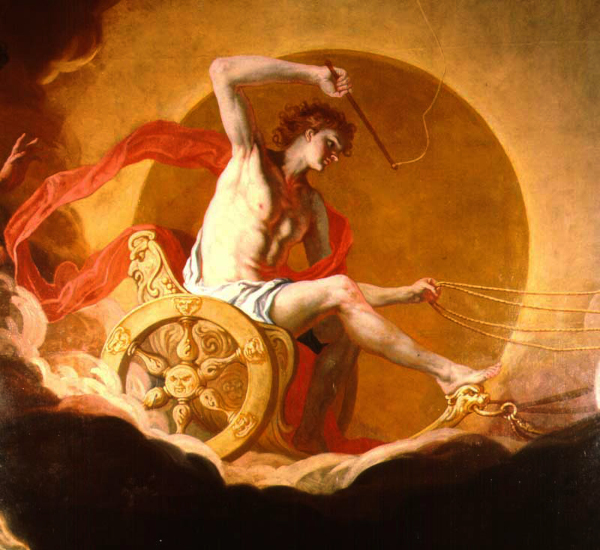
“Therefore is man only himself when lost to himself in The Charioting.” Crowley presents the resolution: the Chariot, Atu VII, symbolizes motion and integration. When the illusory self ceases its assertion, consciousness becomes pure motion. Charioting is not control of the vehicle but ecstatic alignment with it: rider and mount, forces and body, merge in a coherent vector of Will. Whitehead would describe this as concrescence; modern psychology as flow state. Self-conscious friction dissolves; pattern, tendency, and Will manifest unhindered.
VII. The Mèt-Tèt: Rider and Horse
Haitian Vodou provides a culturally resonant parallel. The mèt-tèt, or “master of the head,” governs the individual’s life-pattern. The ritual terminology encodes the Chariot metaphor: the lwa is the rider, the person is the horse. During possession, the individual’s consciousness is temporarily displaced. The I recedes, and the archetypal current animates the body unimpeded.
While Deren’s observations inform this interpretation, Vodou is broader and community-based, and the mèt-tèt is but one facet of a rich cosmology. The alignment mirrors Crowley’s Charioting: the body-mind vehicle moves according to a guiding force (True Will or lwa), revealing the person’s essential pattern.
IX. Deren’s Observations
Maya Deren observed that in Vodou possession, individuals express their essential pattern most fully when the ego recedes, allowing the lwa to manifest. Crowley similarly asserts that man is only himself when lost to himself in the Charioting. In both traditions, the ‘self’ functions as a vessel for impersonal force: the “soul” is the moving pattern of energy that manifests when personal ego recedes.
X. Pattern, Tendency, and Will
The mèt-tèt exemplifies the persistence of pattern, tendency, and Will. Throughout Crowley’s Charioting, the creaking “I,” the hidden generative potential, and the body-mind alignment all converge to reveal a coherent vector of motion. It is not “James” or “Marie” who persists; it is the signature rhythm animating the organism. In Vodou, this rhythm is the lwa; in Thelema, True Will; in process philosophy, a vector of evolving relations.
The “soul,” therefore, is a recurring configuration of energy, an archetypal current, manifested through body, mind, and action, rather than a static personal essence.
XI. Every Man and Every Woman is a Star
Crowley’s Liber AL vel Legis asserts:
“Every man and every woman is a star.”
Here, individuality is reframed as a cosmic metaphor: each consciousness is a radiant point, a unique trajectory within the universe. The soul is not fragile or egoic; it is a self-aware spark of motion and Will. Its persistence is not moral or personal but structural, defined by the pattern of its trajectory in relation to its stellar system, its position and motion relative to other centers of being.
Thelemic cosmology draws upon Egyptian antecedents: Khabs, the star or starlight, and Khu, the immortal spirit, suggest that each individual is a luminous point of consciousness within the infinite body of space. True Wills sometimes harmonize, sometimes clash; the constancy lies in the pattern itself, not in the outcome of interaction. This balance reflects the tension between sovereignty and relation: a star is self-propelled, yet its trajectory becomes consequential and relational to other stars.
This dynamic interplay, the constant unfolding of unique purpose, is what Crowley calls “the consciousness of the continuity of existence” (Liber AL I:26). This consciousness arises from the realization of one’s own patterned, impersonal motion as an inseparable part of the cosmic fabric. The soul, therefore, persists not as a fixed ego, but as an enduring trajectory of motion, tendency, and Will. It is a stellar rhythm woven into the infinite field of being.
XII. After Death — Continuity of Pattern
In Vodou, the gros bon ange (vital life-force) and ti bon ange (individual consciousness) separate at death. The gros bon ange, which sustains biological and spiritual vitality, returns to the cosmic reservoir of energy, the “waters” of existence from which all life arises. The ti bon ange, associated with personal memory and self-awareness, may linger as a ghost, dissolve through neglect, or be ritually guided toward integration with the ancestors. Rituals such as the desounen (ritual of separation) and retire d’âme (retrieval of the soul) assist in this process, ensuring that the ti bon ange is reintegrated harmoniously into the ancestral current.
What continues, therefore, is not the personality but the pattern, what the Thelemite would call the vector of True Will, or what process philosophy terms the continuity of creative advance. The mèt-tèt, the archetypal governing current, persists across embodiments. Death, in this sense, is not annihilation but the redistribution of informational and energetic patterns, continuity without sameness, transformation without loss.
Just as Crowley’s Charioteer is “only himself when lost to himself,” the gros bon ange returns to the motion of existence when the “I” dissolves. In both systems, the soul is continuity of pattern, not the persistence of self. This is consonant with the modern scientific view of identity as emergent: the organism as a temporary organization of information that, upon death, returns its constituents to the broader field of becoming.
XIII. The Soul as a Current
Across Crowley, Vodou, process philosophy, and contemporary science, the evidence converges: the soul is an active current rather than a discrete, immortal ego. It is a living pattern of energy, information, and intention. It is not a static essence but motion, tendency, and relation. The gros bon ange, the mèt-tèt, the True Will, and the processual concrescence of Whitehead all describe aspects of this same dynamic ontology.
The individual, therefore, isn’t a thing but an event, a rhythmic expression of consciousness within a greater field. Personality, memory, and form dissolve; the underlying pattern endures by recurring rather than persisting. The soul isn’t preserved by stasis but renewed by motion.
The Charioting illustrates this principle: when the ego recedes, the organism becomes the vehicle of its pattern, the horse of Vodou carrying the rider of Will, aligned and moving without friction, fully alive. To live one’s soul is to become that current in motion. It is to be at once the horse and the rider, the field and the form.
Don’t let the conversation stop here. Join us at Blue Sky – @thebohemianstar.com. If you’re still lingering in the old spaces, you can also join our private inner circle over at The Bohemian Star Salon on Facebook to share thoughts on music, culture and the weird side of history.
Bibliography
- Maya Deren, Divine Horsemen: The Living Gods of Haiti (New York: McPherson & Company, 1983).
- Aleister Crowley, The Book of Lies (London: Wieland & Co., 1913).
- Aleister Crowley, Liber AL vel Legis (The Book of the Law), 1904.
- Alfred North Whitehead, Process and Reality (New York: Macmillan, 1929).
- William James, Essays in Radical Empiricism (New York: Longmans, Green, and Co., 1912).
- Ilya Prigogine and Isabelle Stengers, Order Out of Chaos: Man’s New Dialogue with Nature (New York: Bantam Books, 1984).
- Steven Pinker, How the Mind Works (New York: W. W. Norton, 1997).
- Karen McCarthy Brown, Mama Lola: A Vodou Priestess in Brooklyn (Berkeley: University of California Press, 1991).
- Susan Blackmore, Consciousness: An Introduction (Oxford: Oxford University Press, 2018).
- Rupert Sheldrake, The Presence of the Past: Morphic Resonance and the Habits of Nature (Rochester, VT: Park Street Press, 1995).
Discover more from The Bohemian Star
Subscribe to get the latest posts sent to your email.