Contemporary media and entertainment have largely reduced the Kama Sutra to a catalog of elaborate sexual positions, but the classical text is concerned with the art of desire and the disciplines attending pleasure. It informs aesthetics, psychology, and the power to shape intimacy and culture.
Traditionally attributed to Vatsyayana and most likely composed in the second half of the third century CE, the Kama Sutra emerged from a sophisticated urban culture where love, marriage, wealth, religion, and refinement were all subjects worthy of study. The Kama Sutra is an effort to bring intelligence to appetite and a systematic structure to desire.
The Four Aims of Life
Ancient Indian thought frames human life through four aims. There is dharma: moral order, duty, the structure that keeps both society and the individual from collapsing into chaos. Artha addresses material well-being, prosperity, and the practical business of survival and status. Kama tends to pleasure, desire, aesthetic and erotic fulfillment and the enjoyment of the senses in their fullness. Finally, there is moksha: liberation, the ultimate spiritual release from the cycle of rebirth.
The Kama Sutra addresses the third of these aims. It treats pleasure as a legitimate dimension of human flourishing that is significant enough to require education. Kama should coexist with dharma and artha, to enrich life and heighten experience without overwhelming it or dissolving into excess.
Atmosphere and the Art of Refinement
What makes the text remarkable is its attention to atmosphere and training. It speaks of conversation, grooming, music, poetry, dress. It describes how lovers read each other’s gestures and expressions, how anticipation intensifies contact, how timing and restraint deepen sensation. Pleasure becomes a means of shaping and deepening intimacy.
Pleasure, in this framework, unfolds within environment and intention. The text pays careful attention to space: to cleanliness, fragrance, adornment, privacy. Lovers prepare the chamber. They prepare the body. They prepare the mind. Refinement is part of arousal. Beauty heightens receptivity.
The education of the senses extends beyond touch. The text encourages lovers to cultivate conversation, wit, musical ability, poetry, and discernment in dress.
Attraction grows from attentiveness. Desire ripens through suggestion and restraint. The encounter becomes layered with glances, pauses, shifting proximity, and the gradual permission of contact. Sensation deepens and intensifies when it’s allowed to develop.
The Role of Polarity
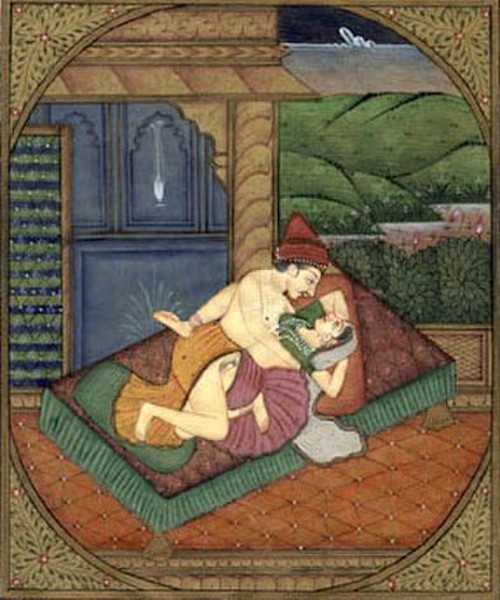
There is also an unmistakable awareness of polarity. Attraction depends upon difference: temperament, energy, posture, initiative. Where one advances, the other yields. When one teases, the other responds. The dance itself generates current, and the encounter finds a smooth, fluid rhythm.
Parallels in Other Traditions
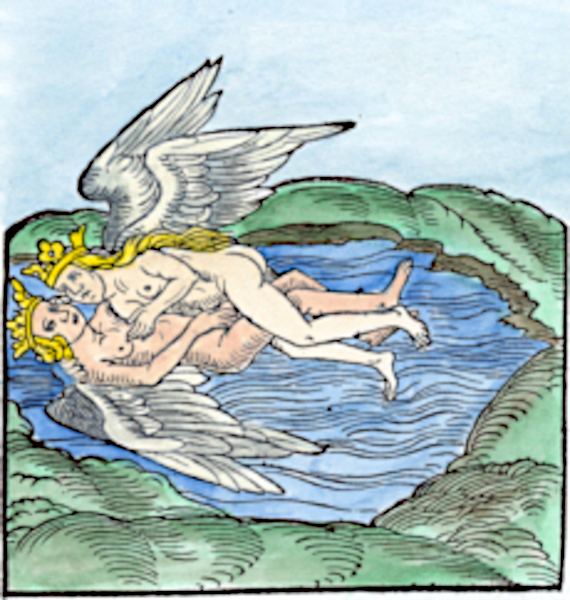
Across cultures, people have often expressed this dynamic symbolically. The Greeks used the phrase Hieros Gamos — literally “sacred marriage” — to describe mythic unions between divine figures whose joining ensured fertility, stability, and renewal. Such stories dramatized the coming together of complementary forces: sky and earth, masculine and feminine, order and vitality, whose union sustained life itself. The imagery varies, but the underlying insight remains consistent: tension resolved through union generates power. In the intimate sphere, partners experience that power as pleasure; in the symbolic sphere, it signifies creation.
Within Indian philosophical traditions, thinkers often understand the body as more than flesh and describe it in terms of subtle energy. Yogic literature speaks of Kundalini, a latent force said to reside at the base of the spine, often symbolized as a coiled serpent. When awakened through discipline, breath, meditation, or intense experience, this force rises through subtle centers of awareness known as chakras, points in the body associated with perception, emotion, and consciousness.
The Kama Sutra isn’t a tantric manual, nor does it map erotic experience onto the chakra system. Yet it emerged from a culture that doesn’t sharply divide the physical from the energetic. Sensation influences awareness. Emotional alignment intensifies experience. Union can stir vitality that reverberates beyond the immediate moment of contact. In this context pleasure isn’t only physical release. It is activation and an expansion of perception and sense of presence.
Magia Sexualis
In the nineteenth century, Western occult philosophy would articulate a parallel understanding of erotic polarity, though expressed in more explicitly metaphysical terms. Paschal Beverly Randolph argued that sexual union creates a dynamic exchange of force between partners. He described an exchange of what he called magnetic or vital energy. When aligned in emotion and intention, two people could direct that shared intensity toward a chosen aim, imprinting desire with purpose.
In Magia Sexualis, the erotic act becomes structured and intentional. Practitioners concentrate pleasure. They understand the moment of climax as an apex where will and sensation converge. The union of bodies becomes an event capable of shaping thought, strengthening resolve, or sealing intention. Polarity generates force. Whether expressed through ritual symbolism or intimate partnership, the meeting of complementary energies produces heightened vitality. The Kama Sutra situates that vitality within the cultivation of relationship and social harmony, while Randolph frames it as a means of directing personal will.
Repression vs. Cultivation
Still, the classical Indian sensibility remains distinctive. The Kama Sutra situates pleasure within the broader architecture of a balanced life. Desire is acknowledged as powerful, formative, and worthy of study. The cultivation of desire refines perception, while its excesses distort judgment. Its harmony with dharma and artha stabilizes both intimacy and society.
Cultures that deny sexuality a legitimate place often discover that repression doesn’t eliminate desire; it drives it underground. When people treat erotic life exclusively as shameful or suspect, it tends to reemerge distorted in secrecy, hypocrisy, or compulsive excess.
Certain strands of early modern Protestant moralism, particularly within Puritan communities, attempted to discipline sexuality through rigid codes of conduct and intense moral scrutiny. The result wasn’t the disappearance of desire, but its confinement within narrow channels of guilt and anxiety.
The Kama Sutra represents a different strategy. Rather than suppressing erotic force, it seeks to educate and cultivate it. Instead of condemning pleasure, it assigns it boundaries and responsibilities. Stability arises from integration rather than denial.
The text also recognizes the complexity of human emotion. It discusses jealousy, rivalry, reconciliation, courtship, fidelity, and separation. It understands that erotic life unfolds in an atmosphere of expectation and vulnerability. Pleasure never stands isolated from feeling; it entangles itself with affection, pride, insecurity, and longing. Such complexity demands maturity.
The Kama Sutra reveals a disciplined optimism about human connection. Two people, attentive to one another, capable of restraint and generosity, can create a fulfilling experience that heightens awareness rather than diminishes it. Anticipation sharpens the senses. Mutual delight strengthens attachment. Shared rhythm fosters trust. Desire becomes educational. It teaches timing, empathy, and self-knowledge.
A Critical Perspective
As a product of its time in the urban, elite milieu of ancient India, the Kama Sutra reflects and sometimes reinforces the social order of its era. Addressed largely to cultivated men of means, it includes pragmatic advice on seduction, manipulation, and adultery that assumes unequal power dynamics between genders and privileges heterosexual relations within a hierarchical society. While it grants women notable agency in pleasure and education compared to many ancient texts, it enforces patriarchal norms, class disparities, and caste boundaries that shaped intimate life during the age it was written.
Modern Implications
The modern reduction of the text to illustrated positions overlooks this architecture of attention. The postures reside within a larger philosophy, one that assumes people learn intimacy rather than improvise it, cultivate it rather than consume it.
For contemporary readers, that assumption feels almost radical. In a culture shaped by speed, distraction, and the constant availability of simulated desire, attention itself has become more scarce. The Kama Sutra insists that desire deepens through patience and that attraction matures through conversation. Such mutual attunement requires time.
Restraint, in this sense, isn’t about repression or denial. It’s necessary to create a space for refinement. Anticipation heightens experience and strengthens attachment through longing. Intimacy becomes something deliberately constructed.
When we approach the Kama Sutra seriously, we encounter a vision of erotic life, neither hurried nor ashamed. It is confident in the legitimacy of pleasure. It expects adults to study their own impulses and to elevate them through discipline and imagination.
Don’t let the conversation stop here. Join us at Blue Sky – @thebohemianstar.com. If you’re still lingering in the old spaces, you can also join our private inner circle over at The Bohemian Star Salon on Facebook to share thoughts on music, culture and the weird side of history.
Discover more from The Bohemian Star
Subscribe to get the latest posts sent to your email.