The Strange Journey of Baphomet
How Éliphas Lévi’s Sabbatic Goat became the most misunderstood symbol in occultism
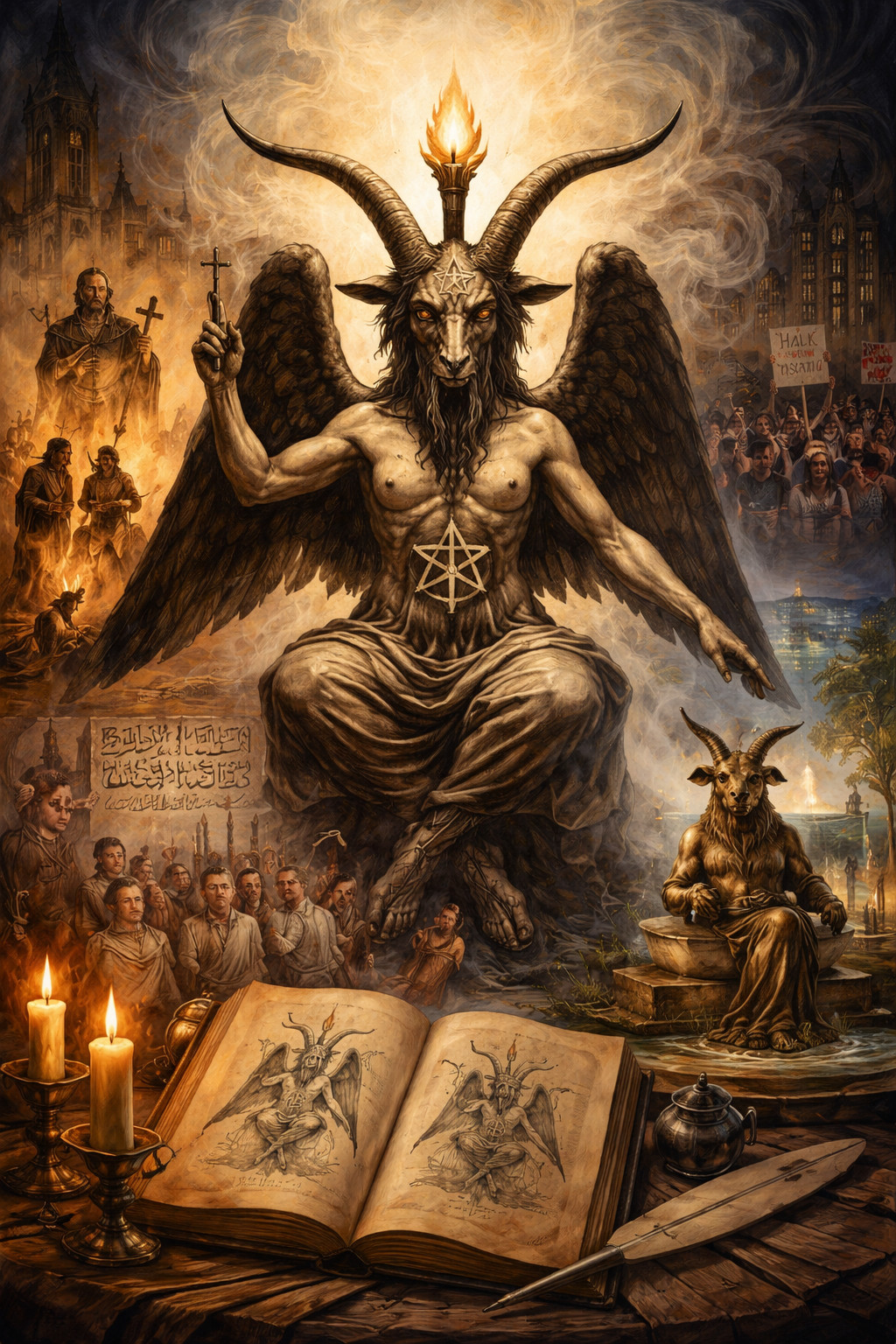
In Transcendental Magic: Its Doctrine and Ritual, Éliphas Lévi set out to create a symbolic key, a visual synthesis of the forces that underlie nature, consciousness, and the act of creation itself. What he produced is the image now popularly called Baphomet: the goat-headed, winged, androgynous figure that modern culture reflexively labels “Satan.”
But Lévi’s own writings make something very clear: the Sabbatic Goat wasn’t intended to represent evil, but rather was meant to represent the universal force that mediates between spirit and matter.

Lévi’s Project: Magic as Symbolic Science
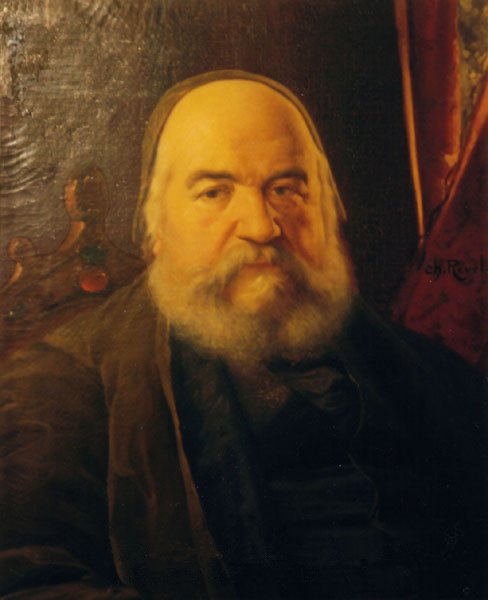
Lévi’s central claim in Transcendental Magic is that magic is the science of symbols. Religions, myths, and occult systems all encode universal truths in allegory. The magician’s task isn’t to worship images, but to read them.
That is the spirit in which Lévi presents the Baphomet of Mendes.
The figure is constructed as a hieroglyph of equilibrium:
• The goat’s head represents the material agent and nature’s generative and resistant power.
• The upright pentagram on the forehead, with one point above, is the sign of light and intelligence ruling instinct.
• The torch between the horns is the flame of consciousness. It represents the Light rising above matter while rooted in it.
• One arm points upward, the other downward, expressing the Hermetic law: as above, so below.
• One arm is male, the other female, signifying the cosmic androgyne, the unity of opposites.
• The caduceus in place of sexual organs represents eternal life and the circulation of vital force.
• The wings, scales, and animal features integrate the elements: air, water, earth, and fire.
Lévi calls this figure a symbol of initiation. It wasn’t intended as something to be worshiped, feared, or moralized, but something to be understood. It’s a diagram, not a demon.
Lévi on Good, Evil, and the Universal Force
Crucially, Lévi rejected the idea that absolute good is simply negated by absolute evil. He rejected the belief in a cosmic duel between two rival powers. In his system, light and darkness are correspondences rather than opposing forces.
For Lévi, what people call “evil” is misdirected force.
The universe, in his view, is animated by what he calls the Astral Light, a neutral, plastic medium that receives the imprint of human imagination and will. This light becomes creative or destructive depending on how it’s shaped. Power itself is morally indifferent. It takes its character from a person’s intentions.
This is why Lévi’s Baphomet looks ambiguous. The figure dramatizes the responsibility that comes with power: matter is not evil, but unconsciousness within matter produces horror.
The goat’s “monstrous” face is the face of unmastered force.
Etteilla, the Devil, and the Meaning of “Force”
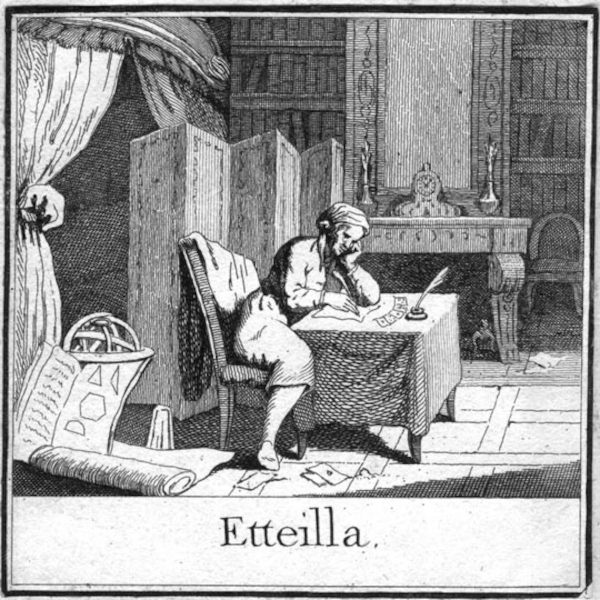
Long before Lévi published Transcendental Magic, the French occultist Jean-Baptiste Alliette, known as Etteilla, had already reinterpreted tarot as a symbolic system. His understanding of the 15th Arcanum (The Devil) was radical for its time.
In his deck and writings, The Devil becomes Force Majeure—The Great Force.
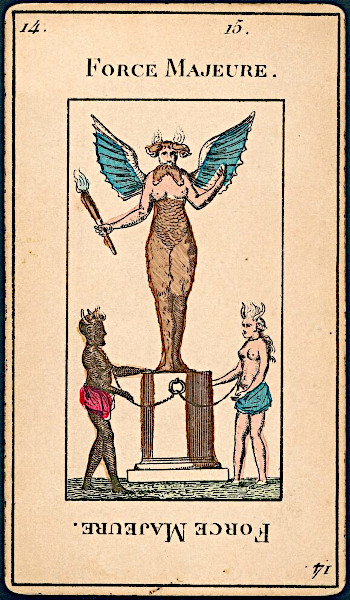
Etteilla stripped away the medieval boogeyman image and replaced it with a philosophical principle. The card no longer represented a supernatural tempter, but the violent, unstoppable momentum of nature and genius, the literal power of the body, and the force that drives material creation.
For Etteilla, the “Devil” was a bridge that linked spirit and matter. It was the principle by which invisible ideas become visible form.
He described the card as the Principle of Activity:
Spirit seeking to penetrate and dress itself in matter.
In Transcendental Magic, Lévi writes:
“Hieroglyph, THE DEVIL, the goat of Mendes, or the Baphomet of the Temple, with all his pantheistic attributes. This is the only hieroglyph which was properly understood and correctly interpreted by Etteilla.”
Lévi is saying that Etteilla got it right because Etteilla saw force instead of evil. Both men understood the same thing in different symbolic languages: power is real and necessary. It becomes dangerous only when unconscious.
Where Etteilla framed the Devil as material force seeking form, Lévi expanded that into a full Hermetic cosmology. The Baphomet becomes the visual expression of that same principle, the universal agent mediating between spirit and matter.
From Symbolic Literacy to Cultural Panic
Modern culture no longer tries to reach the meanings of symbols. Horns mean evil. Goats mean sin. Pentagrams mean danger. The language of symbolic correspondence disappeared, and fear filled the vacuum.
Later occult groups and self-identified “Satanists” embraced the image, as a figure of rebellion, primarily because Christian culture had already cast it as villain. In doing so, they unintentionally confirmed the power of fear itself. The symbol became what people were afraid it was.
What Baphomet Really Represents
Lévi’s Baphomet is a symbol of force. It represents the powers by which anything becomes “real.”
• The energy that drives creation
• The material agent that shapes form
• The bridge between spirit and body
• The responsibility of consciousness within power
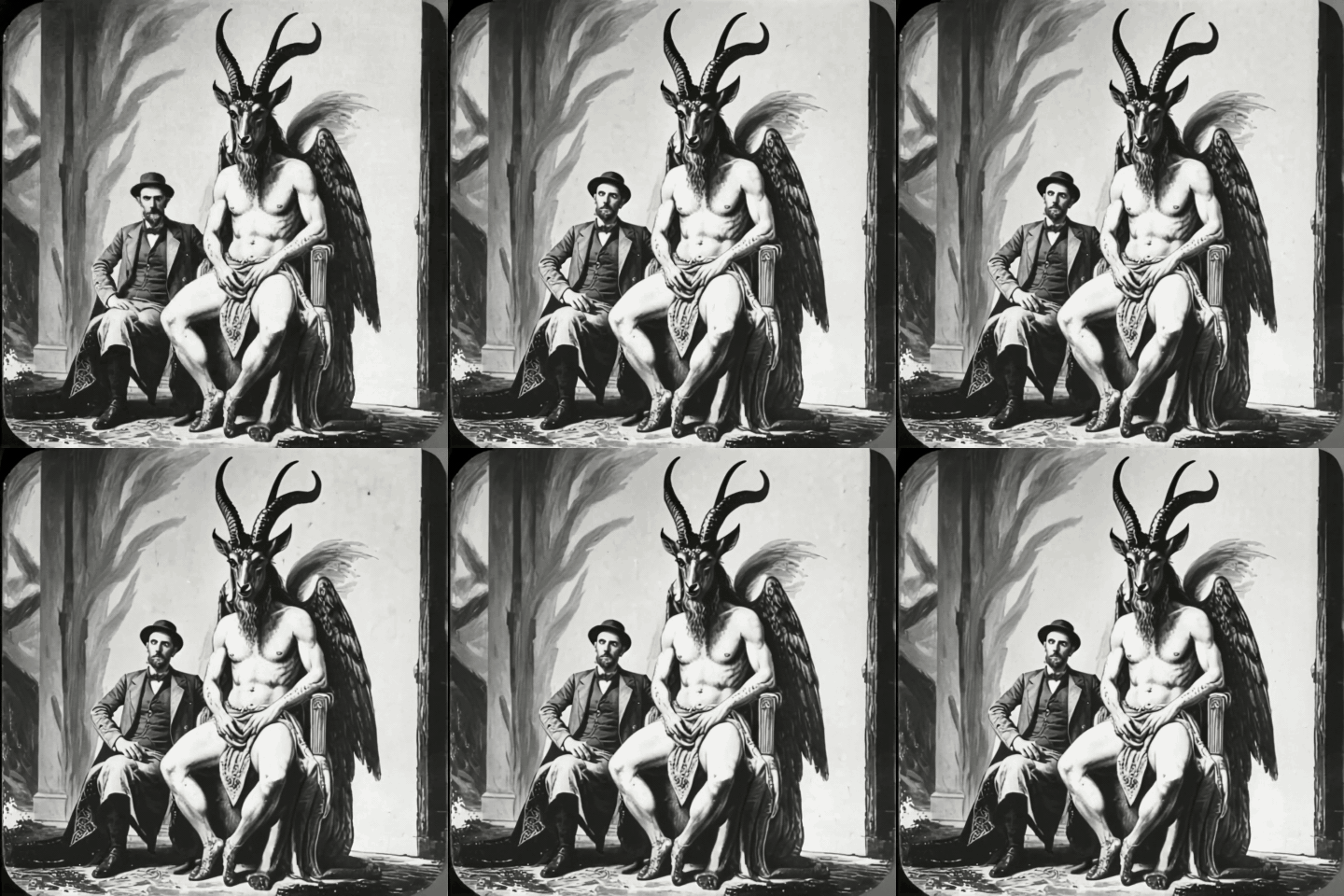
The tragedy of Baphomet’s journey is it became simplified. What was once a philosophical diagram of equilibrium became a cartoon of transgression.
Download “Transcendental Magic” by Eliphas Levi (Translated and Edited by A.E. Waite) for FREE from the Internet Archive (.pdf)
Don’t let the conversation stop here. Join us at Blue Sky – @thebohemianstar.com. If you’re still lingering in the old spaces, you can also join our private inner circle over at The Bohemian Star Salon on Facebook to share thoughts on music, culture and the weird side of history.
Discover more from The Bohemian Star
Subscribe to get the latest posts sent to your email.