Jerusalem 70 CE: The Year the World Ended

The Book of Revelation arose from the destruction of Jerusalem in 70 CE, not a prediction of the world’s end. John of Patmos transposed the trauma of siege, famine, and fire into visionary language. Its apocalyptic imagery memorializes human grief, later misread as cosmic prophecy fueling fear and obedience.

Comments Off on Jerusalem 70 CE: The Year the World Ended

The Star Wire – 10.13.2025

Autumn brings the season of masks—not just for rituals, but the ones we wear daily: for work, for the feed, for "authenticity." The costume parties echo our constant effort to look whole while hiding what hurts. Yet, the mask holds an ancient power: it is an engine of transformation, a shield that lets us speak our truth freely.

Comments Off on The Star Wire – 10.13.2025

Yeshua’s Followers: The First Bohemians

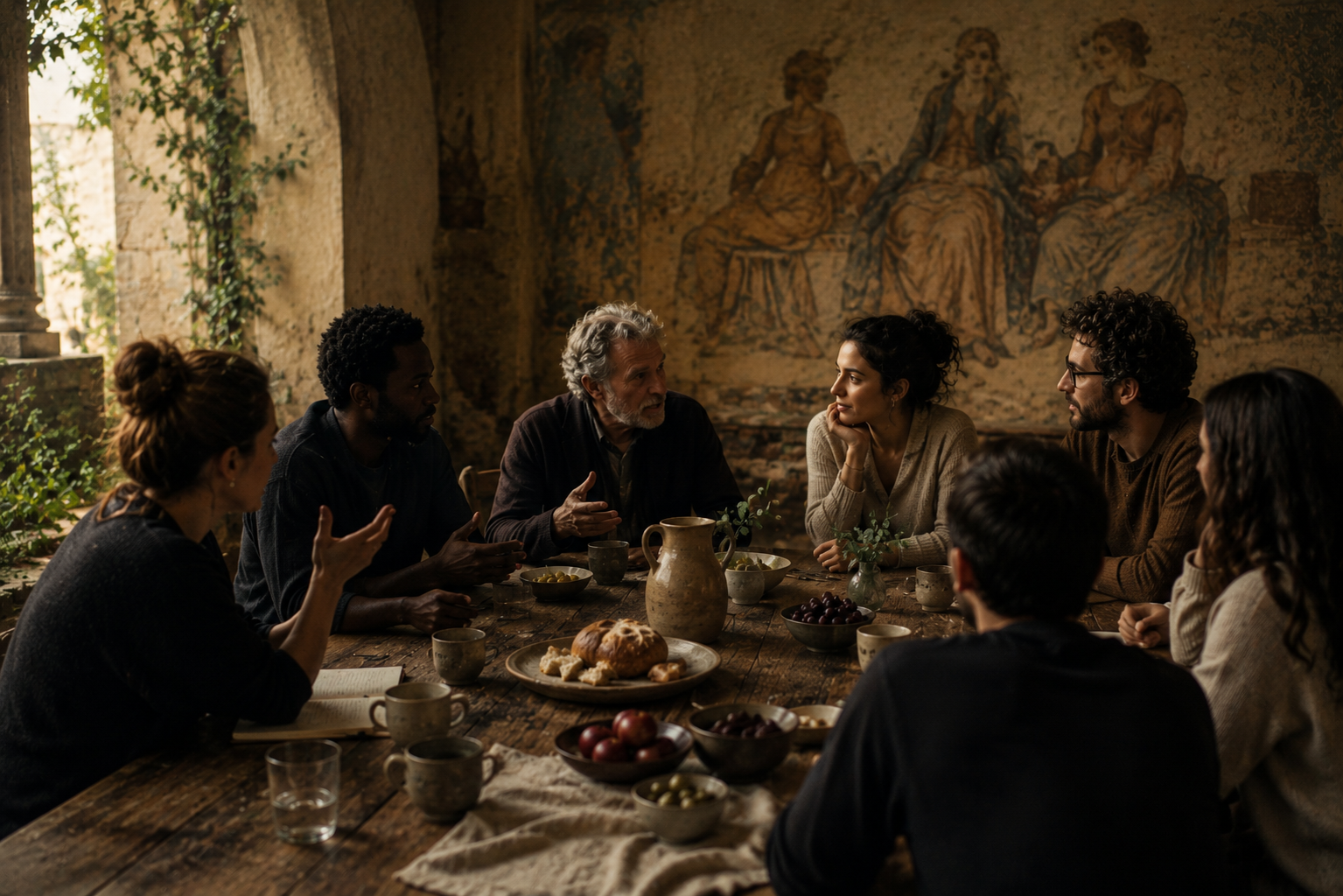
Yeshua’s followers lived like early bohemians—sharing bread, wine, and vision on the margins of empire. Their gatherings echoed through centuries of counterculture, from desert feasts to Paris cafés, wherever laughter, song, and shared simplicity dissolved hierarchy and made freedom a living, human act.

Comments Off on Yeshua’s Followers: The First Bohemians

Yeshua, Jesus, & the Lost Formula of Christianity

The names Yeshua and Jesus mark a divide between a rebel teacher and a god of empire. From Judea’s dusty roads to Rome’s marble halls, the story shifted through language, politics, and faith — reshaped by translation, by power, and by silence — until revolution became religion.

Comments Off on Yeshua, Jesus, & the Lost Formula of Christianity

Two Kingdoms: Yeshua’s Revolution and Christianity’s Empire

Yeshua’s vision of the “kingdom of God” wasn’t another throne but a revolt of compassion. His followers met as equals until empire reclaimed the cross and crowned the rebel as king. The question still echoes: which vision do we serve — the crowned or the compassionate?

Comments Off on Two Kingdoms: Yeshua’s Revolution and Christianity’s Empire

Jesus the Oily One: The Real Meaning of Christos

“Christ” wasn’t a last name—it meant oily, anointed, set apart. From ancient Egyptian burial rites to a woman’s jar of perfume in Bethany, this essay explores how a simple act of anointing shaped one of history’s most misunderstood titles.

Comments Off on Jesus the Oily One: The Real Meaning of Christos